Sunday, November 29 | 10:45 a.m.-10:55 a.m. | SSA04-01 | Room S404CD
Chronic obstructive pulmonary disease (COPD) is a well-known risk factor for lung cancer. But do some COPD phenotypes carry a greater risk of malignancy?"The finding of a lung nodule on a low-dose CT performed for lung cancer screening often prompts further investigation and generates anxiety for the patient," wrote Dr. Caroline Chiles from Wake Forest University Health Sciences Center. "The likelihood that a nodule is malignant can be assessed with a risk prediction model."
In a study of 6- to 9-mm indeterminate lung nodules, readers performed a visual analysis of CT scans for centrilobular emphysema, bronchial wall thickening, centrilobular nodularity, and interstitial fibrosis. They were asked to classify each scan as normal, emphysema-predominant COPD, airway-predominant COPD, or mixed-pattern COPD.
"We found that CT evidence of centrilobular emphysema, paraseptal emphysema, and the CT-defined emphysema-predominant COPD subtype were more closely associated with lung cancer risk than spirometric evidence of airflow limitation," Chiles told AuntMinnie.com.
CT information for both the emphysema-predominant COPD phenotype and severity may perform better in risk prediction than spirometry, the authors concluded.
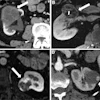

![Images show the pectoralis muscles of a healthy male individual who never smoked (age, 66 years; height, 178 cm; body mass index [BMI, calculated as weight in kilograms divided by height in meters squared], 28.4; number of cigarette pack-years, 0; forced expiratory volume in 1 second [FEV1], 97.6% predicted; FEV1: forced vital capacity [FVC] ratio, 0.71; pectoralis muscle area [PMA], 59.4 cm2; pectoralis muscle volume [PMV], 764 cm3) and a male individual with a smoking history and chronic obstructive pulmonary disorder (COPD) (age, 66 years; height, 178 cm; BMI, 27.5; number of cigarette pack-years, 43.2, FEV1, 48% predicted; FEV1:FVC, 0.56; PMA, 35 cm2; PMV, 480.8 cm3) from the Canadian Cohort Obstructive Lung Disease (i.e., CanCOLD) study. The CT image is shown in the axial plane. The PMV is automatically extracted using the developed deep learning model and overlayed onto the lungs for visual clarity.](https://img.auntminnie.com/mindful/smg/workspaces/default/uploads/2026/03/genkin.25LqljVF0y.jpg?auto=format%2Ccompress&crop=focalpoint&fit=crop&h=100&q=70&w=100)


![Images show the pectoralis muscles of a healthy male individual who never smoked (age, 66 years; height, 178 cm; body mass index [BMI, calculated as weight in kilograms divided by height in meters squared], 28.4; number of cigarette pack-years, 0; forced expiratory volume in 1 second [FEV1], 97.6% predicted; FEV1: forced vital capacity [FVC] ratio, 0.71; pectoralis muscle area [PMA], 59.4 cm2; pectoralis muscle volume [PMV], 764 cm3) and a male individual with a smoking history and chronic obstructive pulmonary disorder (COPD) (age, 66 years; height, 178 cm; BMI, 27.5; number of cigarette pack-years, 43.2, FEV1, 48% predicted; FEV1:FVC, 0.56; PMA, 35 cm2; PMV, 480.8 cm3) from the Canadian Cohort Obstructive Lung Disease (i.e., CanCOLD) study. The CT image is shown in the axial plane. The PMV is automatically extracted using the developed deep learning model and overlayed onto the lungs for visual clarity.](https://img.auntminnie.com/mindful/smg/workspaces/default/uploads/2026/03/genkin.25LqljVF0y.jpg?auto=format%2Ccompress&crop=focalpoint&fit=crop&h=112&q=70&w=112)