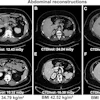
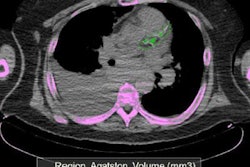
CT calcium testing could significantly refine conventional wisdom regarding long-term statin therapy, as well as favorably influence cost containment and flexible treatment options, according to a study in the October 13 issue of the Journal of the American College of Cardiology.
The study, which involved CT calcium testing in a large patient population, found that nearly two-thirds of adults ages 45 to 75 are either recommended or considered for statins by current guidelines. Almost half of these candidates have no coronary artery calcium, and their actual risk is much lower than the threshold suggested by the guidelines to consider statin therapy. The greatest reclassification was noted in those at an intermediate level of estimated risk by traditional risk factors.
The results showed that a CT coronary artery calcium scan can efficiently guide cost containment and reduce the need for costly medical therapy, including limiting high out-of-pocket expenditures, according to the Society of Cardiovascular Computed Tomography (SCCT).
Coronary artery calcium (CAC) scoring has been used primarily to identify those at an increased risk of downstream events to guide appropriate medical therapy. However, the new data confirm that CAC also identifies those at a low risk of events, especially if they have a CAC score of 0.
The study could therefore significantly affect the physician-patient shared decision process regarding statin initiation for managing cardiovascular risk, added lead author Dr. Khurram Nasir from Baptist Health South Florida. Because the majority of patients are already candidates for statin therapy according to guidelines, the need to identify additional individuals for testing and preventive treatment becomes less compelling.
"We believe these risk-guided approaches can limit overtreatment at the population level," he added.