When trauma patients are transferred to an emergency department from another institution, a standard trauma CT protocol is the last thing you want to do, say researchers from the University of Pittsburgh Medical Center (UPMC). Focused imaging based on the individual patient's medical history and clinical findings is more useful, they concluded.
In an analysis of more than 100 trauma patients transferred to a level I trauma center, only 7% had new findings as a result of body CT imaging, and none caused a change in patient management. That means the scans -- and the radiation dose -- were unnecessary, lead author Dr. Matthew Heller told AuntMinnie.com.
"In none of the patients were there any significant injuries, and because of that none of the patients who had additional scanning had a change in treatment," said Heller, who is an assistant professor of radiology at UPMC. He presented the study at the 2013 American Roentgen Ray Society (ARRS) meeting.
Many hospitals order focused CT imaging for trauma patients based on the patient's history and the findings of a clinical examination. However, trauma patients admitted to UPMC routinely undergo an extensive nonfocused CT exam. The radiology staff hypothesized that the scans are largely unnecessary.
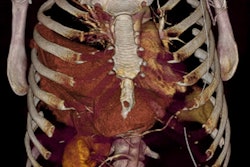
In their retrospective study, Heller and colleagues examined 101 consecutive trauma patients who were transferred to their tertiary referral center over a 10-month period. The patients underwent the hospital's standard CT body trauma protocol, including spine, chest, abdomen, and pelvis, he said. There were 470 new CT scans in all.
"Most [patients] were level II traumas, maybe a hit in the head or a low-speed motor vehicle accident, and they were transferred to the level I center we have here," Heller said. All had undergone imaging before being transferred to UPMC, generally of specific body parts affected in the trauma, "and when they got to us, they got the body pan-scan as we call it," he said.
One of eight emergency radiologists examined each dataset and looked for additional findings that resulted from the new scan. They found very little.
"Only seven minor injuries were found: rib fractures, nondisplaced; maybe a little subcutaneous bruising"; and a nondisplaced osteophyte fracture of the spine, Heller said.
Additional scanning did not change patient management in any cases, he said.
The researchers are going to present information from the study to UPMC's trauma service and they hope get the protocol changed, Heller said. He believes that "defensive medicine" is a big part of what's driving the body scans, and that a better approach is to base scanning on each patient's unique needs.
"Probably the best situation is when the patient's history and physical dictate what is going to be scanned," Heller said. "If the patient has a chest impact from a steering wheel, then do a chest CT, but do we really need a pelvic CT from this patient who had no symptoms when he walked in the door? If their preimaging workup is normal, then probably you don't need to do that, because doing it for the sake of doing it doesn't really yield any benefits."
Heller estimates that CT utilization, imaging costs, and radiation dose can be reduced by at least half if the standard imaging protocol is replaced by imaging dictated by the patient's history and physical examination findings.