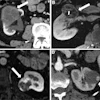
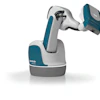
Siemens will once again highlight its dual-source Somatom Definition scanner, which turned heads when it was introduced at the 2005 RSNA conference. The system uses a dual set of x-ray tubes and detector arrays to collect twice the amount of data as a conventional 64-slice CT system, according to the company.
Definition is based on Siemens' Straton x-ray tube, which uses a toggling z-Sharp focal spot to simultaneously emit two x-ray beams that are transmitted to a 32-row detector array. Definition's gantry rotation time is 0.33 sec, and the system can conduct ECG-gated cardiac scans with a temporal resolution of 83 msec.
Siemens says the system's high temporal resolution enables it to conduct cardiac scans of the most challenging patients without beta blockers and regardless of heart rate, and without the need to employ multisegment reconstruction.
Siemens began commercial shipments of Somatom Definition in the U.S. and the rest of the word in the summer of 2006.
Also look for Siemens to tout recent advancements to Somatom Sensation, the company's top-of-the-line scanner before Definition came along. Like Definition, Sensation sports a 0.33-second gantry rotation time and Straton x-ray tube with z-Sharp technology.
By Brian Casey
AuntMinnie.com staff writers
October 26, 2006
Copyright © 2006 AuntMinnie.com