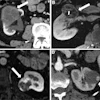
Combining computer-aided detection (CAD) technology with radiologist review of low-dose CT scans was necessary to identify all true pulmonary nodules in a recent study, according to an article in the May issue of the American Journal of Roentgenology.
"CAD software is useful to supplement radiologists' detection performance," wrote the authors from Vancouver General Hospital and St. Paul's Hospital in Vancouver, British Columbia.
To evaluate the value of a CAD system for automated pulmonary nodule detection, the researchers studied 150 consecutive patients between April 2003 and February 2004. The patients had low-dose unenhanced CT exams for lung cancer screening or follow-up of previously detected pulmonary nodules (AJR, May 2006, Vol. 186:5, pp. 1280-1287).
The CT studies were performed on a LightSpeed CT scanner (GE Healthcare, Chalfont St. Giles, U.K.), with the original axial images (1.25-mm slices) utilized by the ImageChecker CT LN-1000 CAD system (R2 Technology, Sunnyvale, CA). A radiology fellow experienced in detecting pulmonary nodules viewed the images using eFilm PACS workstation software (Merge Healthcare, Milwaukee, WI).
The radiologist detected 518 nodules, while the CAD system found 934 nodules. Of the 1,106 separate nodules detected from both techniques, 628 were classified as true nodules on consensus review, according to the researchers.
The radiologist detected 518 (82%) of the 628 nodules, while CAD highlighted 456 (73%) of the 628. All 518 of the radiologist-detected nodules were true nodules, while 456 of the 934 (49%) CAD-detected nodules were true nodules.
The CAD system found 110 true nodules that were missed by the radiologist. In six of the patients, these were the only nodules detected in the examination, changing the imaging follow-up protocol, according to the researchers.
"We found the detection performance of the CAD system and the radiologist to be complementary; the CAD sensitivity was higher in hilar (100%) and the central area (84%), and the radiologist's sensitivity was higher in the peripheral area (86%) and subpleural area (98%)," the authors wrote.
CAD identified 478 lesions that on consensus review were false-positive nodules, a rate of 3.19 (478/150) per patient.
While CAD can help supplement the detection performance of radiologists, it is not adequate to serve as a standalone procedure, according to the authors.
"Furthermore, all suspected lesions detected by CAD must be interpreted by radiologists to rule out false positives," the authors wrote. "In the future, temporal comparison should further improve the usefulness of CAD in the early detection of lung cancer."
By Erik L. Ridley
AuntMinnie.com staff writer
June 1, 2006
Related Reading
Part II: Automated CT lung nodule assessment advances, May 16, 2006
Part I: Automated CT lung nodule assessment advances, April 17, 2006
Trimming CT dose decreases lung CAD performance, January 12, 2006
ELCAP data suggest need to work up secondary lung lesions, January 9, 2006
Management strategies evolve as CT finds more lung nodules, August 19, 2005
Copyright © 2006 AuntMinnie.com