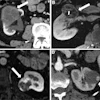
MIAMI BEACH, FL - A recent study on the value of digital subtraction angiography (DSA) for detecting renal artery stenosis had too many flaws, according to a presenter at this week's International Symposium on Endovascular Therapy (ISET), adding that he considered CT angiography (CTA) to be a superior modality.
In his talk at ISET, Dr. Bart Dolmatch explained that the 2004 Renal Artery Diagnostic Imaging Study in Hypertension (RADISH) concluded that DSA, while not the ideal test, was still better at detecting renal artery stenosis than CTA or MR angiography. Dolmatch, who is a professor of radiology at the University of Texas Southwestern Medical Center in Dallas, said that RADISH appeared to have numerous flaws. "For one, I don't think that the authors optimized use of intravenous contrast agents in the study," he said.
Dolmatch also said the image slices that were viewed appeared to be too thick to find subtle indications of stenosis. And, he said, the researchers had asked patients in the study to hold their breath for up to 30 seconds.
"I don't know that elderly, ill patients could possibly do that. These were excessively long breath-holds," he said.
Dolmatch said that current multidetector-row CTA equipment and techniques would most likely overcome the problems seen in RADISH with the modality, namely low sensitivity and a lack of reproducibility.
Dolmatch did acknowledge that CTA has limitations, including ionizing radiation, the necessity for potentially nephrotoxic contrast agents, and a longer exam time than MRA.
But he stressed that CTA still offered several advantages over modalities in the renal arteries, such as better special resolution, more detailed nonvascular findings, and the ability to evaluate in-stent restenosis. CTA exams are also easier to schedule and have demonstrated greater patient acceptance, Dolmatch said.
By Edward Susman
AuntMinnie.com contributing writer
January 26, 2006
Related Reading
High resolution, fast acquisition give 3D MRA edge in abdomen, January 20, 2006
Heart rate determines best CTA reconstruction interval, January 2, 2006
New Doppler index may be better for diagnosing renal artery stenosis, March 23, 2005
Copyright © 2006 AuntMinnie.com