Oncology device vendor RITA Medical Systems of Fremont, CA, reported that the American Medical Association (AMA) has assigned a new Current Procedural Terminology (CPT) code, 50592, for percutaneous radiofrequency ablation (RFA) of renal tumors.
Following the AMA's action, the U.S. Centers for Medicare and Medicaid Services (CMS) issued new national unadjusted payment rate relative value units(a) (RVU) calculations for both facility- and nonfacility-based percutaneous RFA treatment of renal tumors. The new CPT code and payment levels become effective on January 1, 2006, the company said.
CMS also reconfigured the 2006 hospital outpatient payment for RFA of liver tumors, RITA said. This reconfiguration resulted in a 35% increase over 2005 levels in hospital outpatient payments for percutaneous liver RFA procedures and a 55% increase over 2005 levels in hospital outpatient payments for laparoscopic liver RFA procedures. As with the new kidney RFA code, the new payment levels become effective on January 1 next year.
By AuntMinnie.com staff writers
November 23, 2005
Related Reading
RITA boosts sales, trims losses, November 2, 2005
RITA names Angel as CFO, October 18, 2005
RITA downgrades Q3 outlook, October 12, 2005
RITA delays Habib4X in U.S., September 27, 2005
RITA gets 510(k), August 19, 2005
Copyright © 2005 AuntMinnie.com
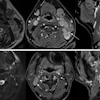
![Images show the pectoralis muscles of a healthy male individual who never smoked (age, 66 years; height, 178 cm; body mass index [BMI, calculated as weight in kilograms divided by height in meters squared], 28.4; number of cigarette pack-years, 0; forced expiratory volume in 1 second [FEV1], 97.6% predicted; FEV1: forced vital capacity [FVC] ratio, 0.71; pectoralis muscle area [PMA], 59.4 cm2; pectoralis muscle volume [PMV], 764 cm3) and a male individual with a smoking history and chronic obstructive pulmonary disorder (COPD) (age, 66 years; height, 178 cm; BMI, 27.5; number of cigarette pack-years, 43.2, FEV1, 48% predicted; FEV1:FVC, 0.56; PMA, 35 cm2; PMV, 480.8 cm3) from the Canadian Cohort Obstructive Lung Disease (i.e., CanCOLD) study. The CT image is shown in the axial plane. The PMV is automatically extracted using the developed deep learning model and overlayed onto the lungs for visual clarity.](https://img.auntminnie.com/mindful/smg/workspaces/default/uploads/2026/03/genkin.25LqljVF0y.jpg?auto=format%2Ccompress&crop=focalpoint&fit=crop&h=100&q=70&w=100)


![Images show the pectoralis muscles of a healthy male individual who never smoked (age, 66 years; height, 178 cm; body mass index [BMI, calculated as weight in kilograms divided by height in meters squared], 28.4; number of cigarette pack-years, 0; forced expiratory volume in 1 second [FEV1], 97.6% predicted; FEV1: forced vital capacity [FVC] ratio, 0.71; pectoralis muscle area [PMA], 59.4 cm2; pectoralis muscle volume [PMV], 764 cm3) and a male individual with a smoking history and chronic obstructive pulmonary disorder (COPD) (age, 66 years; height, 178 cm; BMI, 27.5; number of cigarette pack-years, 43.2, FEV1, 48% predicted; FEV1:FVC, 0.56; PMA, 35 cm2; PMV, 480.8 cm3) from the Canadian Cohort Obstructive Lung Disease (i.e., CanCOLD) study. The CT image is shown in the axial plane. The PMV is automatically extracted using the developed deep learning model and overlayed onto the lungs for visual clarity.](https://img.auntminnie.com/mindful/smg/workspaces/default/uploads/2026/03/genkin.25LqljVF0y.jpg?auto=format%2Ccompress&crop=focalpoint&fit=crop&h=112&q=70&w=112)