Role-specific reductions in protective apron thickness may help address musculoskeletal disorders among interventional radiology (IR) personnel without compromising radiation safety, according to new research.
The study in Mayo Clinic Proceedings highlights the differences in occupational radiation exposures among physicians, nurses, and technologists working in IR and cardiac catheterization laboratories, and the problem of musculoskeletal disorders (MSDs) associated with prolonged protective apron use, according to lead author Jason Hout and colleagues. Their findings were published May 22.
Radiation workers in interventional radiology (IR) are routinely exposed to high levels of scatter radiation, the group noted. Optimizing radiation protection for these workers requires understanding both the mechanisms of MSDs (e.g., staff positioning in a typical IR procedure) and characterizing occupational radiation.
To that end, the study analyzed 1,609 annual dose readings from 758 IR personnel across multiple hospital sites, including large academic teaching hospitals and smaller regional hospitals. Participants were classified into three roles -- clinicians (interventional radiologists, physician assistants, and nurse practitioners), technologists, and nurses -- based on proximity to the radiation source during procedures.
Key findings include the following:
- More than 71% of annual doses fell in the 0 mSv to 5 mSv range, with 33.4% at or below 1 mSv.
- Nurses and technologists generally showed no significant dose differences at the same locations.
"All professional groups demonstrated sufficiently low exposures to potentially allow the use of reduced lead-equivalent thickness protective aprons, which may reduce the risk of musculoskeletal complications," Hout and colleagues concluded.
The researchers said the findings support a role-specific approach to radiation protection, suggesting that reduced lead equivalent apron thickness -- potentially below the standard 0.25 mm -- may be appropriate for some roles, particularly nurses and technologists.
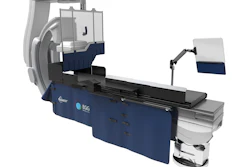
The group also noted that newer shielding systems can eliminate the need for aprons but may not be practical for all procedures or cost-beneficial in all settings. The authors called for further research into the relationship between apron use and musculoskeletal injury and for methods to determine optimal apron thickness based on role-specific exposure data.
"Realizing these aims may enable a holistic and customizable approach to radiation protection requirements in IR settings," the group said.
Read the complete paper here.