CAPE TOWN – Music can be a powerful art form, so why not connect it to a powerful 7T MRI system?
That’s what a team of researchers from Germany and Sweden is doing, outlining a 7T MRI-compatible piano for neuroscientific research in a poster study displayed at the International Society for Magnetic Resonance in Medicine (ISMRM) annual meeting.
“Higher-field imaging such as 7T provides improved spatial resolution and signal quality, which allows researchers to investigate brain activity in much finer detail,” said Kanthida van Welzen, a PhD student from the Karolinska Institute in Solna, Sweden, to AuntMinnie. “This opens possibilities for studying questions related to cortical layers and smaller subcortical structures that are more difficult to examine at lower field strengths.”
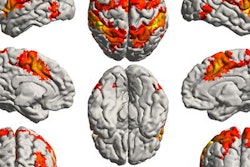
Functional MRI (fMRI) can help with studying underlying brain mechanisms as people perform activities, such as playing a musical instrument. Imaging findings can provide insights into sensorimotor integration, motor control, and neural plasticity.
While advances have been made in MRI-compatible devices, 7T MRI presents unique challenges compared to lower-field imaging via latency, key range, imaging artifacts, and calibration issues.
Van Welzen and colleagues developed a fully functional digital piano for 7T environments. The piano consists of 24 keys and was designed with 3D printing to avoid ferromagnetic materials for safety. The researchers tracked real-time imaging through a complementary metal-oxide–semiconductor (CMOS) computer positioned behind the keyboard, releasing 500 frames per second by detecting changes in light intensity.
“We were using general compatible kinds of plastic, and we had to make sure that we didn’t use magnetic components … that interfere with the magnetic field,” said Nicolas Kutscha from the Max Planck Institute for Empirical Aesthetics in Frankfurt, Germany.
By processing transformative transfer learning (TTL) signaling from MR images to synchronize with the musical instrument digital interface (MIDI), the researchers highlighted that this makes way for accurate alignment of behavioral and neural data.
Nicolas Kutscha explains the approach that he and colleagues implemented to develop their 7T MRI-compatible piano.
The team reported success from its study across sound quality, system responsiveness, and practical use. This included the complete absence of imaging artifacts from the piano or the optical MRI-compatible camera used in the system and real-time latency being consistently below 20 ms (with no obvious delay perceived by the piano player). The team also highlighted the system’s lightweight design, portability, and short setup time.
Van Welzen said that studying music-related brain networks may provide insights into disorders that affect motor control, memory, creativity, or cognitive flexibility, and could eventually help inform rehabilitation or assessment approaches.
“By studying music, we can investigate how these different processes interact to produce complex human behavior,” she told AuntMinnie. “Although music may seem like a very specific domain, the underlying mechanisms we study could also help us better understand cognition more broadly in other real-world behaviors.”
With the MRI-compatible piano, the researchers are currently studying how musical ability influences the neural dynamics of creative idea generation. Another study using 7T MRI is exploring working memory processes in professional musicians.
“Together, these projects aim to deepen our understanding of how complex musical abilities are represented in the brain,” van Welzen said.
Read AuntMinnie’s ShowCast for news coverage from ISMRM 2026.