Cancer screening startup Ezra of New York City has secured $4 million in funding, which it plans to use to launch a prostate cancer screening program.
The funding round, led by venture capital firm Accomplice, is also supported by investors Credo Ventures, Esther Dyson, Founders Future, and Seedcamp, the company said.
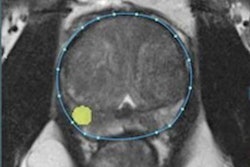
The program will offer men the opportunity to get prostate MRI scans and have them analyzed by radiologists from imaging services provider RadNet's Lenox Hill Radiology facility in Manhattan. It is currently an invite-only program that costs participants $999 per year.
Ezra is also developing Ezra AI, an artificial intelligence (AI) technology designed to help radiologists analyze images. The company plans to seek U.S. Food and Drug Administration (FDA) clearance for the technology in 2019.



![Overview of the study design. (A) The fully automated deep learning framework was developed to estimate body composition (BC) (defined as subcutaneous adipose tissue [SAT] in liters; visceral adipose tissue [VAT] in liters; skeletal muscle [SM] in liters; SM fat fraction [SMFF] as a percentage; and intramuscular adipose tissue [IMAT] in deciliters) from MRI. The fully automated framework comprised one model (model 1) to quantify different BC measures (SAT, VAT, SM, SMFF, and IMAT) as three-dimensional (3D) measures from whole-body MRI scans. The second model (model 2) was trained to identify standardized anatomic landmarks along the craniocaudal body axis (z coordinate field), which allowed for subdividing the whole-body measures into different subregions typically examined on clinical routine MRI scans (chest, abdomen, and pelvis). (B) BC was quantified from whole-body MRI in over 66,000 individuals from two large population-based cohort studies, the UK Biobank (UKB) (36,317 individuals) and the German National Cohort (NAKO) (30,291 individuals). Bar graphs show age distribution by sex and cohort. BMI = body mass index. (C) After the performance assessment of the fully automated framework, the change in BC measures, distributions, and profiles across age decades were investigated. Age-, sex-, and height-adjusted body composition reference curves were calculated and made publicly available in a web-based z-score calculator (https://circ-ml.github.io).](https://img.auntminnie.com/mindful/smg/workspaces/default/uploads/2026/05/body-comp.XgAjTfPj1W.jpg?auto=format%2Ccompress&fit=crop&h=112&q=70&w=112)