Dear AuntMinnie member,
We're focusing on MRI for liver, cardiac, brain, and breast imaging in this issue of the MRI Insider.
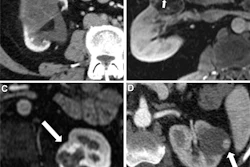
A team from the Quantitative Medical Imaging Coalition (QMIC) outlined RSNA-led guidelines for MR elastography for measuring liver stiffness. The guidelines aim to empower clinicians and researchers with repeatable and reliable monitoring techniques for patients with chronic liver disease. You can read QMIC’s full analysis of these guidelines and the roles that radiologists, technologists, and other professionals have in these guidelines in our featured article.
In neuroimaging news, a brain imaging study has gained traction after retired NFL player Matt Hasseback volunteered for a trial focusing on chronic traumatic encephalopathy (CTE). AuntMinnie’s Will Morton spoke with principal investigator Michael Alosco, PhD, from Boston University about how the study will use MRI and PET to develop methods for diagnosing CTE in the living and improving access for former football players concerned about the disease.
Other recently published studies highlight how MRI scans show differences in brain health among people living in advantaged and disadvantaged neighborhoods, as well as how listening to music can affect the brain and stress. And a study out of the Queen Mary University of London revealed how diastolic function markers derived from cardiac MRI exams can independently predict heart failure and arrythmia.
Researchers out of Georgetown University meanwhile outlined how standardized care guidelines provide common language for communication between MRI technologists and inpatient care teams to prevent safety failures when addressing patient conditions.
And speaking of safety, experts continue to investigate the complexities surrounding a 2023 incident involving a nurse pinned between a hospital bed and an MRI scanner. The latest episode of The Invisible Force focuses on the difficulties co-hosts Toby Gilk and John Posh had when requesting state records from the accident that took place at Kaiser Permanente's Redwood City Hospital in California.
Finally, an AI study found that a large language model (LLM) analyzed MRI reports on par with radiologists for diagnosing orbital and head-and-neck tumors.
Be sure to check out our MRI content area for all the latest MRI news in research, practice, and policy.
Amerigo Allegretto
Associate Editor
AuntMinnie.com