Women who comply with mammography screening guidelines are more likely than those who don't to follow through with other screening exams, such as a Pap smear or a bone mass measurement, according to a study published June 5 in Radiology.
In fact, even receiving a false-positive result on mammography doesn't appear to reduce a women's likelihood of undergoing these other preventive health measures, including the flu vaccine, found the team led by Dr. Stella Kang of NYU School of Medicine.
Kang and colleagues compared the use of preventive services between two groups: 185,625 women who underwent mammography between 2010 and 2014 and a control group who did not have screening mammography during the same time period. They examined the relationship between mammography screening status and compliance with other preventive health measures two years postmammography.
The researchers found that women who underwent mammography screening, with either positive or negative results, were significantly more likely than unscreened women to later receive a Pap smear, a bone mass measurement, or a flu vaccine.
Perhaps women who comply with screening mammography guidelines are more proactive about their health in general and, thus, open to a referring physician's guidance on other screening exams, Kang and colleagues suggested.
"Our theory is that when patients are counseled about mammography screening, this represents an opportunity for the physician to bring up other preventive services and the health benefits of these services for women in their age group," she said in a statement released by the journal. "So a patient's interest in breast cancer services specifically could raise awareness in preventive services overall."
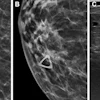


![A normal mammogram confirmed by three-year radiologic follow-up illustrates reader-marked regions of interest (ROIs) during (A) unaided (round 1) and (B) artificial intelligence (AI)–assisted (round 2) reading. Each colored dot represents an ROI for recall by a human reader. Readers could mark more than one ROI per case, represented by multiple dots of the same color. During AI-assisted reading, the AI system displayed three visible prompts: two with suspicion of malignancy scores of 35% (left mediolateral oblique [L MLO] and craniocaudal [L CC]) and one with a suspicion of malignancy score of 10% (right craniocaudal [R CC]), shown as polygonal overlays. Without AI, six of 10 readers (60%) marked a false-positive ROI. With AI assistance, this fell to two of 10 (20%). R MLO = right mediolateral oblique.](https://img.auntminnie.com/mindful/smg/workspaces/default/uploads/2026/07/2026-07-14-radiology-mammogram-ai-auto-bias.H0bYO8QlWs.jpg?auto=format%2Ccompress&fit=crop&h=100&q=70&w=100)


![A normal mammogram confirmed by three-year radiologic follow-up illustrates reader-marked regions of interest (ROIs) during (A) unaided (round 1) and (B) artificial intelligence (AI)–assisted (round 2) reading. Each colored dot represents an ROI for recall by a human reader. Readers could mark more than one ROI per case, represented by multiple dots of the same color. During AI-assisted reading, the AI system displayed three visible prompts: two with suspicion of malignancy scores of 35% (left mediolateral oblique [L MLO] and craniocaudal [L CC]) and one with a suspicion of malignancy score of 10% (right craniocaudal [R CC]), shown as polygonal overlays. Without AI, six of 10 readers (60%) marked a false-positive ROI. With AI assistance, this fell to two of 10 (20%). R MLO = right mediolateral oblique.](https://img.auntminnie.com/mindful/smg/workspaces/default/uploads/2026/07/2026-07-14-radiology-mammogram-ai-auto-bias.H0bYO8QlWs.jpg?auto=format%2Ccompress&fit=crop&h=112&q=70&w=112)