The battle over breast screening spilled into the realm of social media on May 18 as two sides of the mammography debate dueled over a hashtag designed to promote screening awareness.
The imbroglio began when organizers of the Women Informed to Screen Depending on Measures of Risk (WISDOM) study sought to use the hashtag #EndTheConfusion to try to generate publicity for their research and get more women to enroll in the study. The WISDOM study is designed to see if routine mammography screening of women in their 40s can be replaced by risk-based screening.
Currently, 12,000 women are enrolled in the WISDOM study, but organizers are hoping to boost that to 100,000 to give the trial statistical power over 10 to 20 years, according to an email obtained by AuntMinnie.com. WISDOM study organizers therefore urged supporters to participate in a "Women's Day of Wisdom" virtual social media event on May 18, using a variety of hashtags, including #EndTheConfusion.
Proponents of population-based screening for younger women got wind of the initiative, however, and organized their own counterevent based on the hashtag (which previously has been used by the Society of Breast Imaging to promote screening). Screening advocates flooded the hashtag with a variety of pro-screening messages and statistics illustrating the role of mammography in saving the lives of women in their 40s.
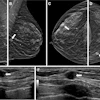


![A normal mammogram confirmed by three-year radiologic follow-up illustrates reader-marked regions of interest (ROIs) during (A) unaided (round 1) and (B) artificial intelligence (AI)–assisted (round 2) reading. Each colored dot represents an ROI for recall by a human reader. Readers could mark more than one ROI per case, represented by multiple dots of the same color. During AI-assisted reading, the AI system displayed three visible prompts: two with suspicion of malignancy scores of 35% (left mediolateral oblique [L MLO] and craniocaudal [L CC]) and one with a suspicion of malignancy score of 10% (right craniocaudal [R CC]), shown as polygonal overlays. Without AI, six of 10 readers (60%) marked a false-positive ROI. With AI assistance, this fell to two of 10 (20%). R MLO = right mediolateral oblique.](https://img.auntminnie.com/mindful/smg/workspaces/default/uploads/2026/07/2026-07-14-radiology-mammogram-ai-auto-bias.H0bYO8QlWs.jpg?auto=format%2Ccompress&fit=crop&h=100&q=70&w=100)


![A normal mammogram confirmed by three-year radiologic follow-up illustrates reader-marked regions of interest (ROIs) during (A) unaided (round 1) and (B) artificial intelligence (AI)–assisted (round 2) reading. Each colored dot represents an ROI for recall by a human reader. Readers could mark more than one ROI per case, represented by multiple dots of the same color. During AI-assisted reading, the AI system displayed three visible prompts: two with suspicion of malignancy scores of 35% (left mediolateral oblique [L MLO] and craniocaudal [L CC]) and one with a suspicion of malignancy score of 10% (right craniocaudal [R CC]), shown as polygonal overlays. Without AI, six of 10 readers (60%) marked a false-positive ROI. With AI assistance, this fell to two of 10 (20%). R MLO = right mediolateral oblique.](https://img.auntminnie.com/mindful/smg/workspaces/default/uploads/2026/07/2026-07-14-radiology-mammogram-ai-auto-bias.H0bYO8QlWs.jpg?auto=format%2Ccompress&fit=crop&h=112&q=70&w=112)