Women's imaging firm Hologic has received clearance from the U.S. Food and Drug Administration (FDA) for a new specimen radiography system.
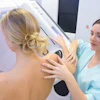
Called Trident, the cart-mounted system uses Hologic's selenium-based digital detector technology with a 12 x 14-cm active imaging area to produce images for rapid verification of tissue specimens such as breast biopsy samples. The system is designed to free up a facility's primary mammography system, which some sites use for specimen biopsy if they don't have a dedicated unit.
Trident is designed for use in the operating room, where breast tissue is surgically excised, and in biopsy suites where minimally invasive, stereotactic, or ultrasound breast biopsies are performed, the company said.






![A normal mammogram confirmed by three-year radiologic follow-up illustrates reader-marked regions of interest (ROIs) during (A) unaided (round 1) and (B) artificial intelligence (AI)–assisted (round 2) reading. Each colored dot represents an ROI for recall by a human reader. Readers could mark more than one ROI per case, represented by multiple dots of the same color. During AI-assisted reading, the AI system displayed three visible prompts: two with suspicion of malignancy scores of 35% (left mediolateral oblique [L MLO] and craniocaudal [L CC]) and one with a suspicion of malignancy score of 10% (right craniocaudal [R CC]), shown as polygonal overlays. Without AI, six of 10 readers (60%) marked a false-positive ROI. With AI assistance, this fell to two of 10 (20%). R MLO = right mediolateral oblique.](https://img.auntminnie.com/mindful/smg/workspaces/default/uploads/2026/07/2026-07-14-radiology-mammogram-ai-auto-bias.H0bYO8QlWs.jpg?auto=format%2Ccompress&fit=crop&h=112&q=70&w=112)


