Sonography programs are difficult to get into because of the limited number of students accepted in each cohort. The stringent application process and requirements are meant to determine which students are more likely to be successful in the program.
In the past, our program has had students withdraw in the first semester, unable to keep up with the rigor and expectations. Or worse, they determined the profession was not a good fit for them after they had invested extensive time and effort and filled slots that prevented other students from achieving their goal.
 Casey Davis of Angelina College.
For this reason, it is important to have students make an informed decision about pursuing the sonography profession and have a better understanding of what they can expect to experience in the program. After attending a sonography educator's conference, I decided blended learning could help us do just that.
Flipped classroom, problem-based learning, e-learning, and hybrid learning are all synonyms for blended learning, a teaching method that combines online learning with the traditional face-to-face method. Traditionally, a lecture format is used in the classroom. Students arrive unprepared, and the instructor must present the factual knowledge, resulting in less time for learning how to apply that information to the clinical environment.
More time must be spent on the application of knowledge to meet program learning outcomes that require graduates to demonstrate competency as an entry-level sonographer. Sonographers must be self-directed and take ownership of their work, so their educational experience should include the opportunity to practice this before they enter the workforce.
Blended learning reverses the traditional learning model, having students learn the factual knowledge prior to class and then using classroom time for higher order learning, including collaboration, discussion, analysis, and synthesis of the material. In other words, this method simulates the role and responsibilities of a sonographer because it shifts the responsibility of learning to the student, allows for self-directed learning, and promotes collaboration and critical thinking.
Before implementing blended learning into all of our sonography courses, I piloted it in our "Introduction to Sonography" course, a program prerequisite. My goal was threefold:
- Test a blended learning approach before restructuring the entire sonography program.
- Improve attrition and retention rates.
- Better prepare students for entering the sonography program.
This six-week course would provide a glimpse of the rigorous program while exposing students to the sonography profession. The introduction course was face-to-face, but all the learning resources were uploaded to our learning management system.
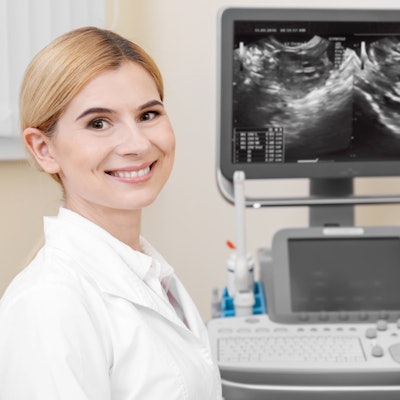
Required textbook readings, chapter PowerPoint presentations, YouTube videos, weblinks, and videos I created were provided along with a course calendar in an effort to convey course expectations and provide digital resources that would enhance the students' learning. Students had to create an individual learning agenda that they would use throughout the course to build time management skills and facilitate self-directed learning. Application of knowledge was built into the course with competency in knobology and basic scanning. Class time was used for hands-on practice of knobology and basic scanning, with the instructional information provided online through the learning management system.
The students experienced the sonographer's role of manipulating the transducer while also having to use the buttons on the control panel of the ultrasound machine. The culminating project in week 6 required students to reflect on their learning and create a two-minute video explaining why they wanted to be a sonographer.
The amount of material covered in the course, as well as the building of knowledge required, accurately represented the sonography program, providing students with a better understanding of what to expect once accepted.
After the piloted course, I had the inflated sense that I could now incorporate blended learning into my other courses with ease. My first mistake was inserting digital resources into a different course and calling it blended learning.
It became apparent rather quickly that this effort was not yielding the same results as my piloted course, which led me to reflect on the difference in the two courses. Unfortunately, students may not automatically use resources just because they are provided, especially if incentives and consequences are not apparent. I used a backward design approach to redesign the introduction course after I had determined specific course learning outcomes.
Digital resources themselves are not blended learning. Course design is crucial. Also, there were hiccups with the digital resources themselves. The software used to create the knobology videos was no longer supported by the creator. I did not get all of the videos created in time for each machine because of malfunctions that occurred while editing content. This resulted in having to quickly find replacement videos on YouTube, which were sufficient but not exactly comparable to the ones I had created.
All told, the blended learning environment fulfilled its purpose and shifted the learning responsibility to the student. However, I did not anticipate the anxiety and resistance that a new learning environment would cause the students and how long it would take them to adapt. Students' prior educational experience was based on the traditional format, and they initially struggled to meet the expectations of being prepared prior to class and taking ownership of their learning.
Students need to be let in on the big picture so that they will more readily accept what you are trying to persuade them to do. As a result of my oversight, they were resistant to the transition and their grades reflected it, which increased their anxiety even more.
Change is a cause for anxiety not only for students but also for teachers as well. Time is always a factor for instructors, and there's never enough of it. When you have to not only redesign the course but also find and create your own digital resources, you may fall short or stop before you even start.
Implementing blended learning into your curriculum is not all or nothing. It should be done slowly -- one unit at a time, if necessary. Things will not always go as planned. Your students may realize this, but so what? When they see you adapt and push forward, you are modeling the behavior you want them to use in the clinical setting.
With these lessons learned, I realize blended learning implementation is a process, not an event. Continuing to learn through trials and tribulations while sharing my experiences will further my growth and the growth of others. Collaboration within our professional learning network is key. Without the generosity of a fellow sonography educator, who shared her knobology and scanning competency resources and experience with me, I would not have been able to accomplish what I did in a six-week course.
Without delay, I will continue to incorporate blended learning into our program so that the students' learning environment provides them with the opportunity to practice critical thinking, teamwork, and accountability -- all key attributes of a sonographer.
Casey Davis is a credentialed sonographer from the American Registry for Diagnostic Medical Sonography (ARDMS) in abdominal, ob/gyn, breast, pediatric, and vascular sonography. She has been a sonography educator for 10 years and is the program director for Angelina College's sonography program. She can be reached at [email protected].
The comments and observations expressed are those of the author and do not necessarily reflect the opinions of AuntMinnie.com.