

A new imaging-based grading system using CT and MRI scans can reliably assess the severity of nasopharyngeal carcinoma and predict patient survival outcomes, with the system showing excellent reliability and significant prognostic value for treatment planning.
- The four-tier imaging grading system (grades 0-3) achieved excellent interrater reliability with an ICC of 0.87 and intrarater reliability of 0.95.
- Patients with grade 3 iENE had significantly shorter overall survival compared to grade 0 patients, with a hazard ratio of 3.30.
- All higher grades (1, 2, and 3) showed shorter distant metastasis-free survival than grade 0, with hazard ratios ranging from 2.11 to 2.39.
- The study analyzed 401 nasopharyngeal carcinoma patients treated between 2007 and 2025, with three independent radiologists grading each case.
- Medical societies including AOSNHNR, ASHNR, and ESHNR developed this standardized classification system to improve consistency in radiologist assessment of extranodal extension.
A joint task force grading system for imaging-derived extranodal extension (iENE) could better assess patients with nasopharyngeal carcinoma, suggest findings published September 22 in Radiology.
The grading system, based on CT and MRI exams, showed excellent reliability and good prognostic value, wrote researchers led by Pae Sun Suh, MD, PhD, from Yonsei University in South Korea and colleagues.
“Our study provides clinically relevant evidence supporting the prognostic value of iENE based on pretreatment imaging alone,” the Suh team wrote.
Extranodal extension (ENE) is a negative prognostic factor in head and neck cancers. The eighth edition of the American Joint Committee on Cancer and Union for International Cancer Control tumor-node-metastasis (TNM) staging system for head and neck cancer (TNM-8) incorporated clinical and radiologic evidence of ENE as additional nodal criteria. The ninth version of the TNM staging system (TNM-9) incorporated advanced ENE invading surrounding organs into the N3 criterion for nasopharyngeal carcinoma.
The Head and Neck Cancer International Group meanwhile set up an expert consensus that proposed standardized terminology and a four-tier classification system, with grades ranging from 0 to 3.
And the Asian-Oceanian Society of Neuroradiology and Head and Neck Radiology (AOSNHNR), American Society of Head and Neck Radiology (ASHNR), and European Society of Head and Neck Radiology (ESHNR) Joint Task Force developed educational materials to improve agreement among radiologists for assessing ENE in patients with nasopharyngeal carcinoma. These guidelines say that “definitive and unequivocal” iENE should be applied in the nodal category.
Suh and colleagues studied the reliability and prognostic value of the proposed joint task force iENE grading system. The retrospective single-center study included 401 patients with nasopharyngeal carcinoma who were treated between 2007 and 2025.
Three radiologists independently graded iENE at pretreatment CT and/or MRI using the proposed four-tier classification system for patients with cervical lymph node metastases.
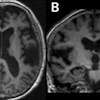
 Representative MRI scans for which the independently assigned imaging-derived extranodal extension (iENE) grades differed among the readers. (A) Axial and sagittal images in a 56-year-old male patient with nasopharyngeal carcinoma and cervical nodal metastases. Readers 1 and 3 interpreted the finding as a metastatic lymph node invading the left sternocleidomastoid muscle (arrow) and assessed an iENE grade of 3, whereas reader 2 assigned a grade of 2. After joint review, the radiologists reached a consensus on the absence of definite sternocleidomastoid muscle invasion, and the final iENE grade was 2. (B) Axial and sagittal images in a 52-year-old male patient with nasopharyngeal carcinoma and cervical nodal metastases. Reader 1 interpreted the findings as a single enlarged metastatic lymph node and assessed an iENE grade of 1, whereas readers 2 and 3 interpreted them as two coalescent metastatic lymph nodes (arrows) and assessed a grade of 2. After joint review, the radiologists reached a consensus on the coalescence of the two metastatic lymph nodes, and the final iENE grade was 2.RSNA
Going by consensus-based final iENE grades, the team reported patients being assigned the following grades: grade 0 (n = 223), grade 1 (n = 36), grade 2 (n = 94), and grade 3 (n = 48).
The iENE grading system achieved excellent interrater reliability (ICC, 0.87) and intrarater reliability (κ = 0.95).
Compared with patients with iENE grade 0, patients with iENE grade 3 had shorter overall survival (hazard ratio, 3.30; p < .001). And patients with iENE grades 1, 2, and 3 had shorter distant metastasis–free survival than patients with iENE grade 0, with hazard ratios of 2.33 (p = 0.02), 2.11 (p = 0.006), and 2.39 (p = 0.006), respectively.
Finally, the researchers found no evidence of a difference in prognostic performance between the TNM-8 and TNM-9 systems.
The results highlight the strength of the proposed iENE grading system in improving consistency for radiologist reporting, the study authors wrote. They added that the system can also improve outcome prediction for patients.
“We recommend that this grading system be actively implemented in clinical practice,” the authors wrote.
Read the full study here.

.fFmgij6Hin.png?auto=compress%2Cformat&fit=crop&h=100&q=70&w=100)




.fFmgij6Hin.png?auto=compress%2Cformat&fit=crop&h=167&q=70&w=250)


