
MRI-guided navigated transcranial magnetic stimulation (TMS) improves treatment outcomes for military personnel who suffer from combat-related post-traumatic stress disorder (PTSD), researchers have reported.
Study findings suggest that "navigated TMS can be an efficacious addition to behavioral therapy for combat-related PTSD," according to a team led by Peter Fox, MD, of the University of Texas Health Science Center in San Antonio. The results were published April 7 in JAMA Network Open.
"These are exciting findings for the hundreds of thousands of U.S. service members and veterans suffering from combat-related PTSD, including many here in Military City USA and throughout South Texas," Fox said in a statement released by the Center.
Combat-related PTSD is a debilitating condition that affects 4% to 17% of the nearly three million U.S. military personnel who deployed to Iraq and Afghanistan alone, the investigators noted. Drug therapy is widely prescribed for PTSD but is often ineffective, carries unacceptable adverse effects, or both, while trauma-focused cognitive behavioral therapies, though effective, are subject to high dropout rates.
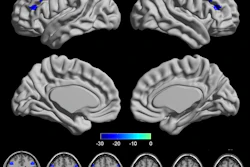
Fox and colleagues explored whether navigated TMS -- individually targeted using MRI-derived models of cortical surface folding, cortical column orientation, and functional connectivity -- could improve both the depth and durability of PTSD symptom relief when added to an intensive residential therapy program. They conducted a trial that enrolled 119 active-duty service members and veterans at Laurel Ridge Treatment Center in San Antonio (a residential facility that draws patients from 93 military bases across 26 states and overseas) with moderate to extreme PTSD.
Each study participant underwent structural and functional MRI scans before treatment began, the results of which clinicians used to model the folding and column orientation of each individual's cortex and to map the functional connectivity between the dorsolateral prefrontal cortex and subgenual cingulate cortex (a circuit that has been associated with mood and trauma disorders). Patients received either active or "sham" navigated TMS as well as a simultaneous 30-day standard-of-care program that consisted of twice-weekly exposure therapy and daily psychotherapeutic activities.
The investigators reported that both active and sham treatment groups showed meaningful symptom reductions by the end of the 30-day program, confirming the value of intensive residential care. But the active TMS group demonstrated significantly greater improvement on both the self-reported PTSD Checklist for DSM-5 and the clinician-administered CAPS-5 scale at the end of treatment.
They also found the following:
- At one month post-treatment, 85% of active TMS recipients had achieved clinically significant reductions in PTSD symptoms, compared with 59% of those who received sham stimulation.
- By three months post-treatment, 73% in the active TMS group still showed clinically significant improvement compared to less than 30% in the sham group.
- This durability advantage extended to depression symptoms as well, with the active TMS group maintaining lower PHQ-9 scores (a depression assessment tool) through follow-up.
- Adverse events were mild, with headache the most common complaint in both groups and no serious events reported.
More research on navigated TMS is needed, the investigators noted. But they see "potential for similar success with other protocols that combine TMS with other cognitive-behavioral therapies, with other types of PTSD patients and in settings that do not require hospitalization," according to the University of Texas Health Science Center statement.
"If … TMS is approved for PTSD treatment, it could become broadly accessible and make a big impact on PTSD care," the statement said.
Access the full study here.
.fFmgij6Hin.png?auto=compress%2Cformat&fit=crop&h=100&q=70&w=100)

.fFmgij6Hin.png?auto=compress%2Cformat&fit=crop&h=167&q=70&w=250)


