
MRI technology was launched into the world of imaging 50 years ago. In the decades since, the modality has become a key part of patient care.
At the upcoming RSNA 2021 meeting in Chicago, attendees will have the opportunity to hear from researchers from around the world about the benefits of MRI for diagnosing and staging disease, as well as tracking the effectiveness of treatment.
Artificial intelligence (AI) continues to be a hot topic in healthcare, and a variety of scientific sessions will explore how MRI fits into the world of AI. Look for a refresher course that will highlight the use of deep learning with MRI for image acquisition, reconstruction, and analysis -- from both clinical and technical perspectives -- and how deep-learning techniques could best be applied to applications such as quantitative and low-field MRI.
Cardiac MRI is taking off, and there will be a plethora of presentations about the use of the modality for heart imaging. Topics explored will range from how AI can boost the efficacy of cardiac MRI and imaging suspected heart tumors to identifying myocarditis in young athletes and tracking the long-term effects of COVID-19 disease and the effects of vaccination.
MRI safety is another pressing topic in the field of radiology. Unfortunately, this year saw two tragic, fatal accidents involving MRI, one in Utah and one in South Korea. At RSNA 2021, attendees can expect a thorough discussion of MRI safety, including a review of current efforts to standardize safety protocols; a look at the international consensus statement first published in 2016 that outlines MRI safety duties of medical directors, safety officers, and safety experts; and an update about the activities of the American Board of Magnetic Resonance Safety.
On the women's imaging side, RSNA session presenters will explore the use of abbreviated breast MRI protocols and how AI and MRI work together to image dense breast tissue.
Finally, look for sessions on MRI for emergency room applications, from imaging acute neurological conditions and determining when musculoskeletal MRI may be better than CT to how best to use the modality to evaluate patients' abdominal pain.
These themes represent only the tip of the proverbial iceberg at the meeting; see below for specific scientific abstracts we're highlighting as part of our premeeting coverage. And if you'd like to take a look at the conference's complete catalog of scientific abstracts and educational programs, check out the RSNA 2021 meeting program.



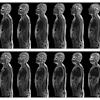
![Overview of the study design. (A) The fully automated deep learning framework was developed to estimate body composition (BC) (defined as subcutaneous adipose tissue [SAT] in liters; visceral adipose tissue [VAT] in liters; skeletal muscle [SM] in liters; SM fat fraction [SMFF] as a percentage; and intramuscular adipose tissue [IMAT] in deciliters) from MRI. The fully automated framework comprised one model (model 1) to quantify different BC measures (SAT, VAT, SM, SMFF, and IMAT) as three-dimensional (3D) measures from whole-body MRI scans. The second model (model 2) was trained to identify standardized anatomic landmarks along the craniocaudal body axis (z coordinate field), which allowed for subdividing the whole-body measures into different subregions typically examined on clinical routine MRI scans (chest, abdomen, and pelvis). (B) BC was quantified from whole-body MRI in over 66,000 individuals from two large population-based cohort studies, the UK Biobank (UKB) (36,317 individuals) and the German National Cohort (NAKO) (30,291 individuals). Bar graphs show age distribution by sex and cohort. BMI = body mass index. (C) After the performance assessment of the fully automated framework, the change in BC measures, distributions, and profiles across age decades were investigated. Age-, sex-, and height-adjusted body composition reference curves were calculated and made publicly available in a web-based z-score calculator (https://circ-ml.github.io).](https://img.auntminnie.com/mindful/smg/workspaces/default/uploads/2026/05/body-comp.XgAjTfPj1W.jpg?auto=format%2Ccompress&fit=crop&h=100&q=70&w=100)


![Overview of the study design. (A) The fully automated deep learning framework was developed to estimate body composition (BC) (defined as subcutaneous adipose tissue [SAT] in liters; visceral adipose tissue [VAT] in liters; skeletal muscle [SM] in liters; SM fat fraction [SMFF] as a percentage; and intramuscular adipose tissue [IMAT] in deciliters) from MRI. The fully automated framework comprised one model (model 1) to quantify different BC measures (SAT, VAT, SM, SMFF, and IMAT) as three-dimensional (3D) measures from whole-body MRI scans. The second model (model 2) was trained to identify standardized anatomic landmarks along the craniocaudal body axis (z coordinate field), which allowed for subdividing the whole-body measures into different subregions typically examined on clinical routine MRI scans (chest, abdomen, and pelvis). (B) BC was quantified from whole-body MRI in over 66,000 individuals from two large population-based cohort studies, the UK Biobank (UKB) (36,317 individuals) and the German National Cohort (NAKO) (30,291 individuals). Bar graphs show age distribution by sex and cohort. BMI = body mass index. (C) After the performance assessment of the fully automated framework, the change in BC measures, distributions, and profiles across age decades were investigated. Age-, sex-, and height-adjusted body composition reference curves were calculated and made publicly available in a web-based z-score calculator (https://circ-ml.github.io).](https://img.auntminnie.com/mindful/smg/workspaces/default/uploads/2026/05/body-comp.XgAjTfPj1W.jpg?auto=format%2Ccompress&fit=crop&h=112&q=70&w=112)