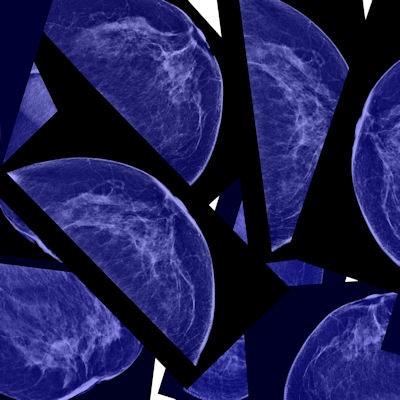
Breast MRI is an effective adjunct screening technology for women at high risk for breast cancer who had negative results on full-field digital mammography (FFDM) or digital breast tomosynthesis (DBT) exams, according to a study published in the February issue of the American Journal of Roentgenology.
The findings confirm breast MRI's place in the supplemental screening arsenal in this population of women, no matter which technology is used to screen them, wrote a team led by Dr. Ashley Roark of Baylor College of Medicine in Houston.
"Our results suggest that despite the modest increase in cancer detection reported for DBT over FFDM, patients at higher-than-average risk screened with DBT continue to benefit from supplemental screening with breast MRI," the group wrote.
Mammography's effectiveness in screening women at high risk for breast cancer is limited, and breast MRI offers an additional screening tool, Roark and colleagues noted. But as screening DBT has rapidly spread into clinical practice, it has become clear that research is needed to explore how breast MRI performs with DBT as an adjunct modality for high-risk women (AJR, February 2019, Vol. 212:2, pp. 271-279).
"Most of the evidence supporting DBT screening is in average-risk populations, and most of the evidence supporting MRI screening is in high-risk patients screened with conventional mammography without DBT," the researchers wrote. "As DBT is increasingly being used as the primary breast cancer screening modality, the question arises if the proven benefits of screening with breast MRI when used as an adjunct to conventional full-field digital mammography are maintained when used as an adjunct to DBT."
For their study, Roark and colleagues included 4,418 screening breast MRI exams. Of these, 2,291 were performed between January 2010 and January 2012 on patients with a negative mammography exam in the prior 12 months, while 2,127 were performed between January 2013 and January 2015 on patients with a negative DBT exam in the prior 12 months.
Indications for breast MRI included genetic factors, a personal history of breast cancer, prior chest irradiation, a family history of breast cancer, or other factors generating a lifetime risk of greater than 20%. The researchers estimated the cancer detection rate, abnormal interpretation rate, and positive predictive value of breast MRI.
They found no significant differences in the performance of screening breast MRI between the 2D mammography group and the DBT group across all metrics tracked.
"In a large population of women at higher-than-average risk for breast cancer undergoing screening MRI, the supplemental cancer yield of MRI in women screened with FFDM is maintained in a population screened with DBT," Roark and colleagues wrote.
"These results can inform developing guidelines for MRI as a supplemental screening modality with DBT," they concluded.



![Overview of the study design. (A) The fully automated deep learning framework was developed to estimate body composition (BC) (defined as subcutaneous adipose tissue [SAT] in liters; visceral adipose tissue [VAT] in liters; skeletal muscle [SM] in liters; SM fat fraction [SMFF] as a percentage; and intramuscular adipose tissue [IMAT] in deciliters) from MRI. The fully automated framework comprised one model (model 1) to quantify different BC measures (SAT, VAT, SM, SMFF, and IMAT) as three-dimensional (3D) measures from whole-body MRI scans. The second model (model 2) was trained to identify standardized anatomic landmarks along the craniocaudal body axis (z coordinate field), which allowed for subdividing the whole-body measures into different subregions typically examined on clinical routine MRI scans (chest, abdomen, and pelvis). (B) BC was quantified from whole-body MRI in over 66,000 individuals from two large population-based cohort studies, the UK Biobank (UKB) (36,317 individuals) and the German National Cohort (NAKO) (30,291 individuals). Bar graphs show age distribution by sex and cohort. BMI = body mass index. (C) After the performance assessment of the fully automated framework, the change in BC measures, distributions, and profiles across age decades were investigated. Age-, sex-, and height-adjusted body composition reference curves were calculated and made publicly available in a web-based z-score calculator (https://circ-ml.github.io).](https://img.auntminnie.com/mindful/smg/workspaces/default/uploads/2026/05/body-comp.XgAjTfPj1W.jpg?auto=format%2Ccompress&fit=crop&h=100&q=70&w=100)


![Overview of the study design. (A) The fully automated deep learning framework was developed to estimate body composition (BC) (defined as subcutaneous adipose tissue [SAT] in liters; visceral adipose tissue [VAT] in liters; skeletal muscle [SM] in liters; SM fat fraction [SMFF] as a percentage; and intramuscular adipose tissue [IMAT] in deciliters) from MRI. The fully automated framework comprised one model (model 1) to quantify different BC measures (SAT, VAT, SM, SMFF, and IMAT) as three-dimensional (3D) measures from whole-body MRI scans. The second model (model 2) was trained to identify standardized anatomic landmarks along the craniocaudal body axis (z coordinate field), which allowed for subdividing the whole-body measures into different subregions typically examined on clinical routine MRI scans (chest, abdomen, and pelvis). (B) BC was quantified from whole-body MRI in over 66,000 individuals from two large population-based cohort studies, the UK Biobank (UKB) (36,317 individuals) and the German National Cohort (NAKO) (30,291 individuals). Bar graphs show age distribution by sex and cohort. BMI = body mass index. (C) After the performance assessment of the fully automated framework, the change in BC measures, distributions, and profiles across age decades were investigated. Age-, sex-, and height-adjusted body composition reference curves were calculated and made publicly available in a web-based z-score calculator (https://circ-ml.github.io).](https://img.auntminnie.com/mindful/smg/workspaces/default/uploads/2026/05/body-comp.XgAjTfPj1W.jpg?auto=format%2Ccompress&fit=crop&h=112&q=70&w=112)