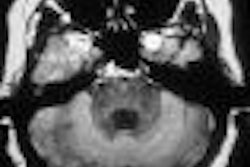
Methamphetamine abusers who go cold turkey may experience a healthy degree of normalization in their neuronal structure and brain function, according to a study in the Archives of General Psychiatry.
Thomas Nordahl, Ph.D., and colleagues used MR spectroscopy (MRS) to look at the effects of sustained drug abstinence on metabolite levels in the anterior cingulate cortex (ACC) and the primary visual cortex (PVC).
Nordahl and many of his co-authors are from the Imaging Research Center at the University of California, Davis, in Sacramento. Others are from the Haight-Ashbury Free Clinics in San Francisco, the Sacramento-based Kaiser Chemical Dependency Recovery Program, and the department of biomedical engineering at UC Davis.
Their study population consisted of 24 meth abusers and 12 control subjects. The users were subdivided into two groups: group one had not abused the drug in one to five years; group two had been off meth for one to six months. Single-voxel 1H MRS and structural MR scans were acquired on 1.5-tesla scanner (Signa NV/i, GE Healthcare, Chalfont St. Giles, U.K.).
The results showed no metabolite differences in the PVC in either the users or controls. However, abnormal N-acetylaspartate (NAA) and creatine/phosphocreatine (Cr) levels were observed in the ACC of all the meth users, regardless of the abstinence length. But abnormally high choline (Cho) and NAA levels in the ACC of users in group two did return to normal levels.
"Longer remission periods may be characterized by less membrane synthesis and turnover, potentially explaining the normalized relative Cho values measured in the affected regions," the authors wrote. In addition, those in group one may be experiencing "axonal pruning," or an adjustment of mistargeted axons (Archives of General Psychiatry, April 2005, Vol. 62:4, pp. 444-452).
Findings from MRS studies offer a better understanding of the neurobiology of addiction and substance abuse treatment, they said, calling for further longitudinal studies that would ideally include preamphetamine abuse imaging.
By Shalmali Pal
AuntMinnie.com staff writer
April 6, 2005
Related Reading
Crank call: Imaging exposes major brain alterations in meth abusers, February 28, 2005
MRS shows cost-benefit strength for brain tumor diagnosis, January 28, 2005
Ex-meth abusers show some reversal in brain damage, March 15, 2004
Copyright © 2005 AuntMinnie.com


![Overview of the study design. (A) The fully automated deep learning framework was developed to estimate body composition (BC) (defined as subcutaneous adipose tissue [SAT] in liters; visceral adipose tissue [VAT] in liters; skeletal muscle [SM] in liters; SM fat fraction [SMFF] as a percentage; and intramuscular adipose tissue [IMAT] in deciliters) from MRI. The fully automated framework comprised one model (model 1) to quantify different BC measures (SAT, VAT, SM, SMFF, and IMAT) as three-dimensional (3D) measures from whole-body MRI scans. The second model (model 2) was trained to identify standardized anatomic landmarks along the craniocaudal body axis (z coordinate field), which allowed for subdividing the whole-body measures into different subregions typically examined on clinical routine MRI scans (chest, abdomen, and pelvis). (B) BC was quantified from whole-body MRI in over 66,000 individuals from two large population-based cohort studies, the UK Biobank (UKB) (36,317 individuals) and the German National Cohort (NAKO) (30,291 individuals). Bar graphs show age distribution by sex and cohort. BMI = body mass index. (C) After the performance assessment of the fully automated framework, the change in BC measures, distributions, and profiles across age decades were investigated. Age-, sex-, and height-adjusted body composition reference curves were calculated and made publicly available in a web-based z-score calculator (https://circ-ml.github.io).](https://img.auntminnie.com/mindful/smg/workspaces/default/uploads/2026/05/body-comp.XgAjTfPj1W.jpg?auto=format%2Ccompress&fit=crop&h=100&q=70&w=100)


![Overview of the study design. (A) The fully automated deep learning framework was developed to estimate body composition (BC) (defined as subcutaneous adipose tissue [SAT] in liters; visceral adipose tissue [VAT] in liters; skeletal muscle [SM] in liters; SM fat fraction [SMFF] as a percentage; and intramuscular adipose tissue [IMAT] in deciliters) from MRI. The fully automated framework comprised one model (model 1) to quantify different BC measures (SAT, VAT, SM, SMFF, and IMAT) as three-dimensional (3D) measures from whole-body MRI scans. The second model (model 2) was trained to identify standardized anatomic landmarks along the craniocaudal body axis (z coordinate field), which allowed for subdividing the whole-body measures into different subregions typically examined on clinical routine MRI scans (chest, abdomen, and pelvis). (B) BC was quantified from whole-body MRI in over 66,000 individuals from two large population-based cohort studies, the UK Biobank (UKB) (36,317 individuals) and the German National Cohort (NAKO) (30,291 individuals). Bar graphs show age distribution by sex and cohort. BMI = body mass index. (C) After the performance assessment of the fully automated framework, the change in BC measures, distributions, and profiles across age decades were investigated. Age-, sex-, and height-adjusted body composition reference curves were calculated and made publicly available in a web-based z-score calculator (https://circ-ml.github.io).](https://img.auntminnie.com/mindful/smg/workspaces/default/uploads/2026/05/body-comp.XgAjTfPj1W.jpg?auto=format%2Ccompress&fit=crop&h=112&q=70&w=112)