A clinical trial published in Radiology found that ketamine combined with midazolam provides better pain control, higher oxygen saturation, and improved patient comfort compared to fentanyl and midazolam for sedation during interventional radiology procedures, with no increase in complications.
- Superior pain control: 98% of ketamine patients achieved pain scores of 4 or lower versus 83% with fentanyl
- Better oxygen saturation: Ketamine group had mean oxygen saturation 1.4% higher and only 2.3% experienced desaturation below 90% compared to 9.8% with fentanyl
- No added complications: No differences in procedure-related or sedation-related complications between the two groups
- Improved patient experience: Ketamine provided deeper sedation, reduced recall, and higher perceived adequacy despite 11.4% experiencing hallucinations
- Trained non-anesthesiologists can safely administer: Study demonstrates radiologist-administered ketamine-midazolam is safe for image-guided procedures
The combination of ketamine and midazolam for sedation during image-guided procedures improves patient experience in interventional radiology without increasing complications, according to a study published September 8 in Radiology.
The study findings could support a shift away from the common practice of interventional radiologists administering a combination of opioids and benzodiazepine for sedation and analgesia.
“As procedural care evolves toward prioritizing patient-centered outcomes and minimizing opioid exposure, continued reliance on opioid-benzodiazepine sedation deserves re-examination,” wrote the researchers led by first author Amy Deipolyi, MD, PhD, of West Virginia University School of Medicine.
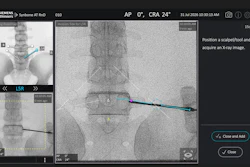
Despite respiratory and analgesic effectiveness concerns, opioid-benzodiazepine regimens remain common for radiology administrated procedural sedation, according to the group. In their single-center clinical trial performed between June 2025 and February 2026, adults undergoing image-guided lung biopsy, bone biopsy, or abscess drainage were randomized to receive either fentanyl and midazolam or ketamine and midazolam.
The researchers found that ketamine and midazolam provided:
· Better pain control -- 98% of patients achieved pain score of ≤ 4 compared with 83% for fentanyl/midazolam (p < 0.001)
· Higher nadir oxygen saturation events -- mean difference of +1.4% (p = 0.001)
· Fewer oxygen desaturation events below 90% -- 2.3% vs. 9.8% (p = 0.02)
It also provided deeper sedation and higher intraprocedural systolic blood pressure. The researchers did note a higher frequency of hallucinations among the ketamine patient group (11.4% vs. 3.8%, p = 0.03), but also an improvement in overall procedural comfort, reduced recall and perceived adequacy of sedation.
There were no differences in procedure-related or sedation-related complications between the two patient groups.
“Radiologist-administered ketamine/midazolam during image-guided procedural sedation improved analgesia and patient-reported experience with fewer hypoxemic events and no increase in complications compared with fentanyl/midazolam,” the authors concluded.
The findings also showed that trained nonanethesiologist physicians can safely administer ketamine and midazolam in image-guided procedural settings, according to the researchers.
“Ultimately, evolving how we sedate our patients is not merely a matter of periprocedural comfort; it is about securing the operational flexibility necessary to push the boundaries of advanced image-guided therapeutic,” said Clifford Weiss, MD, and Lauren Park, MD, both of Johns Hopkins Hospital, in an accompanying editorial. “It is time for interventional radiology to thoughtfully and rigorously consider embracing ketamine.”
The full study can be found here.