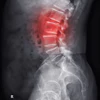
Combined exposure to fluoride and lead produces greater reductions in bone mineral density (BMD) in children and adolescents than either substance alone, according to a recent study.
The finding is from an analysis among 2,378 U.S. adolescents of ages 8 to 19 years old who underwent dual-energy x-ray absorptiometry (DEXA) scans between 2013 and 2016, noted lead author Chunxiang Li, PhD, of Zhengzhou University in Zhengzhou, China, and colleagues.
"Co-exposure to fluoride and lead exacerbates changes in BMD more than single exposure, suggesting synergistic effects on bone impairment," the group wrote. The study was published May 10 in the Journal of Trace Elements in Medicine and Biology.
Fluoride is added to the drinking water of more than 200 million Americans as a public health measure against dental caries, but fluoridated water can promote the leaching of lead from aging pipes and plumbing materials, the authors noted. While both fluoride and lead are known skeletal toxicants, few studies have assessed their combined impact on BMD in adolescents, they noted.
 A graphical abstract of the study.Journal of Trace Elements in Medicine and Biology.
According to the results, plasma and water fluoride each showed U-shaped nonlinear associations with BMD. At lower fluoride concentrations, BMD decreased as fluoride increased, reaching an inflection point at approximately 0.37 µmol/L in plasma and 0.37 mg/L in drinking water. Beyond these thresholds, BMD increased with further increases in fluoride exposure, the researchers reported.
As lead exposure increased, BMD declined sharply at lower exposure levels, followed by a slower, more gradual decrease at higher levels. Lastly, as lead levels increased, BMD of the pelvis and legs decreased, and an interaction model of plasma fluoride and blood lead showed that for every one-unit increase in the interaction term, the BMD of the lumbar spine, left, and right legs decreased by 1.679, 3.104, and 3.068.
“Co-exposure to fluoride and lead has a more pronounced effect on BMD than exposure to either substance alone, indicating that co-exposure to fluoride and lead can exacerbate bone damage,” the researchers wrote.
The introduction of fluorine has helped prevent and control local diseases such as dental caries and osteoporosis, the researchers wrote, yet excessive consumption can cause significant damage to the shape, structure, and function of bones and joints. Meanwhile, the use of lead-based paint, lead pipes, and lead welding materials in the drinking water supply systems of U.S. households has significantly increased the risk of lead exposure among the population, they added.
"It is essential to enhance water quality monitoring, remain vigilant about the hidden risks of long-term low-dose exposure, and prioritize the protection of children's and adolescents' bone health," the researchers concluded.
The full study is available here.