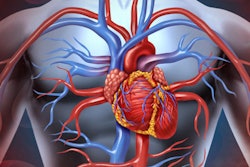
The Society for Cardiovascular Angiography and Interventions (SCAI) has released a new position statement on training, competencies, and organizational recommendations for adult congenital cardiac interventional procedures.
The guidance addresses catheter-based interventions in adults with congenital heart disease, according to a statement published in Catheterization and Cardiovascular Interventions.
The statement, which was endorsed by the Adult Congenital Heart Association, focused on the following areas:
- Eligibility for training
- Training environment and duration of training
- Procedural volume
Some major recommendations include identifying four main training backgrounds for candidates and individual determination of training periods. Additionally, trainees should participate as primary operators or first assistants in at least 150 adult congenital heart disease catheterization cases during interventional training curriculum. Of those, 100 should be interventional procedures.
Furthermore, the guidance suggests that multidisciplinary teams that include professionals who have experience treating adults and children use a collaborative approach to train future specialists. Also, multisociety collaboration should be used to help establish and maintain competency standards for physicians, according to the statement.



![Representative example of a 16-year-old male patient with underlying X-linked adrenoleukodystrophy. (A, B) Paired anteroposterior (AP) chest radiograph and dual-energy x-ray absorptiometry (DXA) report shows lumbar spine (L1 through L4) areal bone mineral density (BMD). The DXA report was reformatted for anonymization and improved readability. The patient had low BMD (Z score ≤ −2.0). (C) Model (chest radiography [CXR]–BMD) output shows the predicted raw BMD and Z score in comparison with the DXA reference standard, together with interpretability analyses using Shapley additive explanations (SHAP) and gradient-weighted class activation maps. The patient was classified as having low BMD, consistent with the reference standard. AM = age-matched, DEXA = dual-energy x-ray absorptiometry, RM2 = room 2, SNUH = Seoul National University Hospital, YA = young adult.](https://img.auntminnie.com/mindful/smg/workspaces/default/uploads/2026/04/ai-children-bone-density.0snnf2EJjr.jpg?auto=format%2Ccompress&fit=crop&h=100&q=70&w=100)


![Representative example of a 16-year-old male patient with underlying X-linked adrenoleukodystrophy. (A, B) Paired anteroposterior (AP) chest radiograph and dual-energy x-ray absorptiometry (DXA) report shows lumbar spine (L1 through L4) areal bone mineral density (BMD). The DXA report was reformatted for anonymization and improved readability. The patient had low BMD (Z score ≤ −2.0). (C) Model (chest radiography [CXR]–BMD) output shows the predicted raw BMD and Z score in comparison with the DXA reference standard, together with interpretability analyses using Shapley additive explanations (SHAP) and gradient-weighted class activation maps. The patient was classified as having low BMD, consistent with the reference standard. AM = age-matched, DEXA = dual-energy x-ray absorptiometry, RM2 = room 2, SNUH = Seoul National University Hospital, YA = young adult.](https://img.auntminnie.com/mindful/smg/workspaces/default/uploads/2026/04/ai-children-bone-density.0snnf2EJjr.jpg?auto=format%2Ccompress&fit=crop&h=112&q=70&w=112)