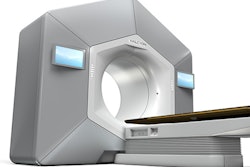
Radiation oncology firm Varian Medical Systems has completed the spin-off of its Imaging Components business, now established as Varex Imaging. The transaction was completed via a distribution of Varex stock to Varian stockholders of record on January 20.
Varian announced the spin-off in May 2016, saying the deal would enable the company to focus on its core radiation therapy business. Under the terms of the separation, Varian stockholders received 0.4 shares of Varex for every one share of Varian they held as of the record date. Varian has approximately 94 million shares outstanding and Varex has approximately 38 million shares outstanding. In connection with the separation, Varian received a $200 million cash payment from Varex.
Varex is focused on being a high-volume manufacturer of x-ray tubes, flat-panel digital detectors, and high-voltage connectors, as well as a supplier of imaging software and specialized accelerators for high-energy x-ray imaging, the firm said.
In other Varian news, Magnus Momsen has been named senior vice president and corporate controller for Varian, replacing Clarence Verhoef, who has assumed the role of chief financial officer for Varex. Separately, Ruediger Naumann-Etienne and Eric Reinhardt have left the Varian board of directors to join the board of Varex Imaging. Varian has reduced the number of its board members to eight.
![Representative example of a 16-year-old male patient with underlying X-linked adrenoleukodystrophy. (A, B) Paired anteroposterior (AP) chest radiograph and dual-energy x-ray absorptiometry (DXA) report shows lumbar spine (L1 through L4) areal bone mineral density (BMD). The DXA report was reformatted for anonymization and improved readability. The patient had low BMD (Z score ≤ −2.0). (C) Model (chest radiography [CXR]–BMD) output shows the predicted raw BMD and Z score in comparison with the DXA reference standard, together with interpretability analyses using Shapley additive explanations (SHAP) and gradient-weighted class activation maps. The patient was classified as having low BMD, consistent with the reference standard. AM = age-matched, DEXA = dual-energy x-ray absorptiometry, RM2 = room 2, SNUH = Seoul National University Hospital, YA = young adult.](https://img.auntminnie.com/mindful/smg/workspaces/default/uploads/2026/04/ai-children-bone-density.0snnf2EJjr.jpg?auto=format%2Ccompress&fit=crop&h=100&q=70&w=100)


![Representative example of a 16-year-old male patient with underlying X-linked adrenoleukodystrophy. (A, B) Paired anteroposterior (AP) chest radiograph and dual-energy x-ray absorptiometry (DXA) report shows lumbar spine (L1 through L4) areal bone mineral density (BMD). The DXA report was reformatted for anonymization and improved readability. The patient had low BMD (Z score ≤ −2.0). (C) Model (chest radiography [CXR]–BMD) output shows the predicted raw BMD and Z score in comparison with the DXA reference standard, together with interpretability analyses using Shapley additive explanations (SHAP) and gradient-weighted class activation maps. The patient was classified as having low BMD, consistent with the reference standard. AM = age-matched, DEXA = dual-energy x-ray absorptiometry, RM2 = room 2, SNUH = Seoul National University Hospital, YA = young adult.](https://img.auntminnie.com/mindful/smg/workspaces/default/uploads/2026/04/ai-children-bone-density.0snnf2EJjr.jpg?auto=format%2Ccompress&fit=crop&h=112&q=70&w=112)