Carestream Health has added a ceiling-mounted tube option for its DRX-Ascend digital radiography (DR) system to provide positioning options for a variety of imaging exams.
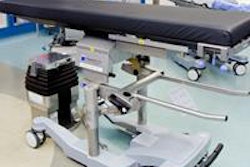
The company also offers a floor-mounted tube stand, a wall stand, and a choice of an elevating float-top table or nonelevating table for the device, according to the firm. DRX-Ascend can be configured with DRX-1 and DRX-1C detectors; the company's small-format 25 x 30-cm detector, DRX 2530C, can be used for orthopedic and tabletop exams. Customers can also choose to install a fixed 43 x 43-cm detector for the wall stand.
The new ceiling-mounted tube option is currently available for order and begins shipping this month, Carestream said.
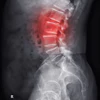





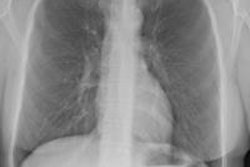


![Representative example of a 16-year-old male patient with underlying X-linked adrenoleukodystrophy. (A, B) Paired anteroposterior (AP) chest radiograph and dual-energy x-ray absorptiometry (DXA) report shows lumbar spine (L1 through L4) areal bone mineral density (BMD). The DXA report was reformatted for anonymization and improved readability. The patient had low BMD (Z score ≤ −2.0). (C) Model (chest radiography [CXR]–BMD) output shows the predicted raw BMD and Z score in comparison with the DXA reference standard, together with interpretability analyses using Shapley additive explanations (SHAP) and gradient-weighted class activation maps. The patient was classified as having low BMD, consistent with the reference standard. AM = age-matched, DEXA = dual-energy x-ray absorptiometry, RM2 = room 2, SNUH = Seoul National University Hospital, YA = young adult.](https://img.auntminnie.com/mindful/smg/workspaces/default/uploads/2026/04/ai-children-bone-density.0snnf2EJjr.jpg?auto=format%2Ccompress&fit=crop&h=112&q=70&w=112)


