Cardiac technology developer St. Jude Medical has received U.S. Food and Drug Administration (FDA) clearance for its Ilumien integrated optical coherence tomography (OCT) and fractional flow reserve (FFR) system.
The combination of OCT and FFR technologies on one platform is designed to assist in optimizing interventional coronary treatment strategies, according to the vendor. Ilumien brings together St. Jude's PressureWire Aeris wireless interventional tool for measuring FFR with the company's C7-XR OCT imaging technology with Extreme Resolution technique, St. Jude said.
PressureWire Aeris is used to evaluate the severity of blood-flow blockages in the coronary arteries, according to the firm. C7-XR OCT with Extreme Resolution is an intravascular imaging technology that visualizes and measures important vessel characteristics that are otherwise not visible or are difficult to assess with older intracoronary imaging technologies.



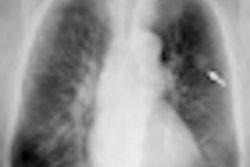


![Representative example of a 16-year-old male patient with underlying X-linked adrenoleukodystrophy. (A, B) Paired anteroposterior (AP) chest radiograph and dual-energy x-ray absorptiometry (DXA) report shows lumbar spine (L1 through L4) areal bone mineral density (BMD). The DXA report was reformatted for anonymization and improved readability. The patient had low BMD (Z score ≤ −2.0). (C) Model (chest radiography [CXR]–BMD) output shows the predicted raw BMD and Z score in comparison with the DXA reference standard, together with interpretability analyses using Shapley additive explanations (SHAP) and gradient-weighted class activation maps. The patient was classified as having low BMD, consistent with the reference standard. AM = age-matched, DEXA = dual-energy x-ray absorptiometry, RM2 = room 2, SNUH = Seoul National University Hospital, YA = young adult.](https://img.auntminnie.com/mindful/smg/workspaces/default/uploads/2026/04/ai-children-bone-density.0snnf2EJjr.jpg?auto=format%2Ccompress&fit=crop&h=112&q=70&w=112)


