
Both systems are compact, floor-standing units that support adult and pediatric general radiography exams, as well as 35 x 84-cm long-length imaging for applications such as scoliosis and extremity exams. They can perform 15 x 30-cm dental panoramic imaging as well.
Carestream also will highlight DirectView DR 9500, which includes a ceiling-mounted U-arm that contains both a tube and detector, and can be moved easily around the patient, according to Carestream. On the CAD side, the company will display its chest CAD and bone mineral testing capability for DirectView DR 3000, currently only being used in China.
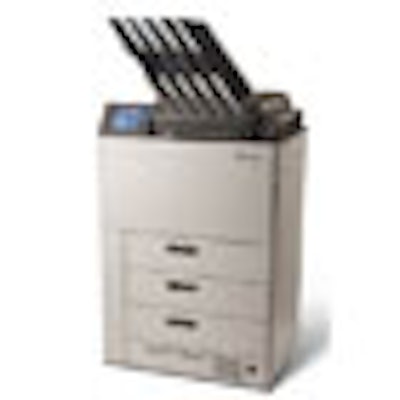
Also in its booth, Carestream will showcase its new DryView 6800 laser imager for general radiography and digital mammography applications. The device produces 650-ppi output for images in all sizes with a throughput of 200 films per hour. DryView 6800 is now available worldwide, according to the company.






![Representative example of a 16-year-old male patient with underlying X-linked adrenoleukodystrophy. (A, B) Paired anteroposterior (AP) chest radiograph and dual-energy x-ray absorptiometry (DXA) report shows lumbar spine (L1 through L4) areal bone mineral density (BMD). The DXA report was reformatted for anonymization and improved readability. The patient had low BMD (Z score ≤ −2.0). (C) Model (chest radiography [CXR]–BMD) output shows the predicted raw BMD and Z score in comparison with the DXA reference standard, together with interpretability analyses using Shapley additive explanations (SHAP) and gradient-weighted class activation maps. The patient was classified as having low BMD, consistent with the reference standard. AM = age-matched, DEXA = dual-energy x-ray absorptiometry, RM2 = room 2, SNUH = Seoul National University Hospital, YA = young adult.](https://img.auntminnie.com/mindful/smg/workspaces/default/uploads/2026/04/ai-children-bone-density.0snnf2EJjr.jpg?auto=format%2Ccompress&fit=crop&h=112&q=70&w=112)


