Dear X-Ray Radiology Insider,
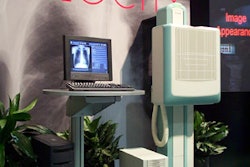
Compared to conventional film-screen or computed radiography (CR), digital radiography (DR) wins the image-quality battle, according to researchers from Germany. A user-preference study of 30 patients who were examined with all three technologies showed that DR was as good as or better than the other methods for visualizing anatomic structures.
The studies were performed under identical exposure conditions (automatic exposure control using the same peak kilovoltage, tube current, and grid) with the exception of a 50% reduction in radiation dose for the DR images. All of the exams were reviewed on hard copy for comparative purposes.
The group evaluated 10 anatomic structures in the lung for visibility, exposure quality, and a subjective overall perception of image quality. CR was the technology of choice for imaging retrocardiac structures, while DR was judged superior for depicting the remaining seven structures.
The researchers postulated that DR’s impressive dynamic range capabilities and detective quantum efficiency (DQE) might explain its high image-quality scores in comparison with film-screen radiography.
As an X-ray Radiology Insider subscriber, you have access to this story before it is published for the rest of our AuntMinnie members on September 19. To read more about this head-to-head showdown of radiographic technologies, go to http://www.auntminnie.com/default.asp?Sec=sup&Sub=xra&Pag=dis&ItemId=59205.
Also, if there’s an x-ray imaging topic you’d like to see us write about, or you would like to author an article for us, please contact me at [email protected]. I look forward to hearing from you!

![Representative example of a 16-year-old male patient with underlying X-linked adrenoleukodystrophy. (A, B) Paired anteroposterior (AP) chest radiograph and dual-energy x-ray absorptiometry (DXA) report shows lumbar spine (L1 through L4) areal bone mineral density (BMD). The DXA report was reformatted for anonymization and improved readability. The patient had low BMD (Z score ≤ −2.0). (C) Model (chest radiography [CXR]–BMD) output shows the predicted raw BMD and Z score in comparison with the DXA reference standard, together with interpretability analyses using Shapley additive explanations (SHAP) and gradient-weighted class activation maps. The patient was classified as having low BMD, consistent with the reference standard. AM = age-matched, DEXA = dual-energy x-ray absorptiometry, RM2 = room 2, SNUH = Seoul National University Hospital, YA = young adult.](https://img.auntminnie.com/mindful/smg/workspaces/default/uploads/2026/04/ai-children-bone-density.0snnf2EJjr.jpg?auto=format%2Ccompress&fit=crop&h=100&q=70&w=100)


![Representative example of a 16-year-old male patient with underlying X-linked adrenoleukodystrophy. (A, B) Paired anteroposterior (AP) chest radiograph and dual-energy x-ray absorptiometry (DXA) report shows lumbar spine (L1 through L4) areal bone mineral density (BMD). The DXA report was reformatted for anonymization and improved readability. The patient had low BMD (Z score ≤ −2.0). (C) Model (chest radiography [CXR]–BMD) output shows the predicted raw BMD and Z score in comparison with the DXA reference standard, together with interpretability analyses using Shapley additive explanations (SHAP) and gradient-weighted class activation maps. The patient was classified as having low BMD, consistent with the reference standard. AM = age-matched, DEXA = dual-energy x-ray absorptiometry, RM2 = room 2, SNUH = Seoul National University Hospital, YA = young adult.](https://img.auntminnie.com/mindful/smg/workspaces/default/uploads/2026/04/ai-children-bone-density.0snnf2EJjr.jpg?auto=format%2Ccompress&fit=crop&h=112&q=70&w=112)