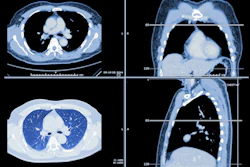
Low-dose chest CT (LDCT) screening is generally well-tolerated both physically and emotionally among lung cancer screening participants, but experiences vary across socioeconomic groups, according to recent research.
The finding is from a prospective study of 468 lung cancer screening participants across both a university health system and a county safety-net system (serving low-income and marginalized communities), using validated patient-reported measures to assess physical and emotional effects of screening.
“We were reassured that overall testing burden was low, suggesting the exam itself is not a major barrier for most patients,” said co-investigator Ruth Carlos, MD, of Columbia University, in a news release from the American College of Radiology. “At the same time, it was notable that differences in patient experience were closely linked to social and economic factors, reinforcing the importance of a more patient-centered and equity-focused approach to screening.”
Lung cancer remains the leading cause of cancer death in the U.S. and adherence to annual low-dose CT screening remains low in real-world settings, the authors explained. Social determinants of health, financial factors, and psychosocial factors have all been linked to screening adherence, but testing-related burden specifically associated with low-dose CT had not been well characterized, they noted.
To bridge the gap, Carlos and colleagues prospectively enrolled English- and Spanish-speaking participants scheduled for low-dose CT at either a university quaternary care health system or an integrated safety-net health system between October 2022 and May 2024. The primary outcome was testing-related burden measured by the Testing Morbidities Index (TMI), a validated seven-domain instrument that quantifies short-term effects on quality of life before, during, and after a diagnostic or screening test. TMI score range from 0 to 100, with higher scores reflecting less burden.
According to the results, overall testing burden was low across both sites. Mean TMI summated scores were 97.5 at the university site and 96.1 at the safety-net site, a statistically significant difference, although both remained well within the minimally burdensome range, the researchers reported.
At the domain level, however, safety-net participants more often reported pain or discomfort than university site participants before screening (13% versus 6%) and during screening (16% versus 8%). In addition, in a multivariable analysis, employment status and insurance coverage were significantly associated with TMI summated scores. Employed and retired participants scored 5.4 and 4.1 points higher than unemployed or disabled participants, and those with government insurance scored 4.4 points higher than Medicaid or uninsured participants.
“LDCT screening was associated with minimal short-term testing-related morbidity overall across diverse populations, although specific subgroups experienced greater testing burden,” the group wrote.
Ultimately, lung cancer screening only works if patients return year after year, and even small, temporary burdens from screening may influence whether people come back for annual exams, the researchers wrote.
"Employing strategies, such as pretest anxiety reduction, to address these detrimental effects of screening may enhance the patient experience and ultimately improve uptake and adherence, particularly in underserved populations," the group concluded.
The study was published online ahead of the August issue of the Journal of the American College of Radiology and is available here.