The U.S. Food and Drug Administration (FDA) has cleared Qure.ai's AI CT software qCT LN Quant.
The company announced the clearance at the 2024 American Association for Bronchology and Interventional Pulmonology (AABIP) meeting being held in Charlotte, NC.
The software supports radiologists and pulmonologists in analyzing lung nodules on noncontrast chest CT scans and tracking volumetric growth as part of monitoring disease progression and offers quantitative characterization of solid lung nodules by measuring average, short-axis, long-axis, and effective diameters. qCT LN Quant allows clinicians to analyze morphological data across single or multiple thoracic studies, including estimated volume doubling time and tracking of nodules over several time points.
qCT LN Quant also generates 2D and 3D reconstructions, Brock malignancy risk scores, and Fleischner Society guidelines-based management suggestions to support clinical decision-making. It is potentially eligible under two CPT codes for reimbursement -- tissue quantification CPT 0722T for CT and 3D reconstruction code, Qure.ai said.

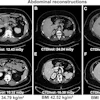

![Axial images from unenhanced calcium score cardiac CT (left) and curved planar reformation images from CT angiography (right) show that higher long-term exposure to air pollution is associated with greater coronary artery calcium and more obstructive coronary artery disease (CAD). Top row: Images in a 68-year-old male patient with higher 10-year mean ambient air pollution exposure (7.9 μg/m3 for particulate matter measuring ≤2.5 μm in diameter [PM2.5] and 17.4 parts per billion [ppb] for NO2) with extensive CAD (coronary artery calcium score [CACS] >1,000 and obstructive CAD [≥70% diameter stenosis]). Bottom row: Images in a 57-year-old female patient with lower 10-year mean ambient air pollution exposure (6.3 μg/m3 for PM2.5 and 4.6 ppb for NO2) with no CAD (CACS = 0 and no obstructive stenosis).](https://img.auntminnie.com/mindful/smg/workspaces/default/uploads/2026/06/hanneman.r6SMLzkezo.png?auto=format%2Ccompress&fit=crop&h=100&q=70&w=100)


![Axial images from unenhanced calcium score cardiac CT (left) and curved planar reformation images from CT angiography (right) show that higher long-term exposure to air pollution is associated with greater coronary artery calcium and more obstructive coronary artery disease (CAD). Top row: Images in a 68-year-old male patient with higher 10-year mean ambient air pollution exposure (7.9 μg/m3 for particulate matter measuring ≤2.5 μm in diameter [PM2.5] and 17.4 parts per billion [ppb] for NO2) with extensive CAD (coronary artery calcium score [CACS] >1,000 and obstructive CAD [≥70% diameter stenosis]). Bottom row: Images in a 57-year-old female patient with lower 10-year mean ambient air pollution exposure (6.3 μg/m3 for PM2.5 and 4.6 ppb for NO2) with no CAD (CACS = 0 and no obstructive stenosis).](https://img.auntminnie.com/mindful/smg/workspaces/default/uploads/2026/06/hanneman.r6SMLzkezo.png?auto=format%2Ccompress&fit=crop&h=112&q=70&w=112)