Dear CT Insider:
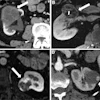
Congenital lung abnormalities in children manifest in a variety of forms, and it can be challenging for their doctors to determine whether these conditions are malignant or benign.
CT is often used to try to distinguish this, but it's unclear whether it's the best modality for the task, particularly when it comes to what are more often than not benign pulmonary airway malformations -- but which can harbor life-threatening tumors called pleuropulmonary blastomas.
In this month's Insider Exclusive, we're highlighting what a research team from Johns Hopkins University Medical Center in Baltimore has to say about CT's efficacy for this indication.
After you've read that story, check out another article regarding pediatric CT: specifically, how using a simple "pop-up" alert in the emergency department can reduce the incidence of unnecessary exams and thus spare children from gratuitous radiation. As you peruse our CT Community, you'll also find:
- An update on the iodinated CT contrast shortage.
- A story on the very real benefits of photon-counting CT in terms of cutting radiation dose.
- Research on whether the SARS-CoV-2 omicron variant shows specific signs on CT exams.
- A study on how changes in the use of CT in the emergency department may point to how clinicians can cope with future pandemics.
Speaking of the emergency room, do patients who present with psychiatric symptoms really need to undergo CT imaging? A team of Yale researchers say no. And check out what experts have to say about the effect the U.S. Preventive Services Task Force's 2021 lung cancer screening guidance has had on Black Americans -- a patient group considered more vulnerable to the disease.
Finally, discover what U.K. researchers have found about the AstraZeneca COVID vaccine -- and the news isn't good.
CT has been shown time and again to be a valuable clinical tool for diagnosis, treatment, and disease follow-up. Please visit our CT Community often to keep up with the modality's cutting edges -- and if you have CT topics you'd like to see covered, feel free to contact me.