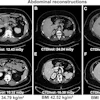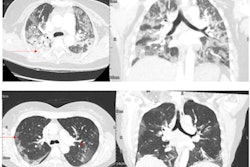
Adding artificial intelligence (AI) to chest CT exams can save an hour a day in interpretation time, according to a study published June 13 in the American Journal of Roentgenology.
A team led by Dr. Basel Yacoub of the Medical University of South Carolina found that integrating an AI support platform into the CT workflow reduced daily interpretation times by 22.1%.
"This is the first study to our knowledge to assess the impact of an AI support platform on chest CT interpretation times in a real-world clinical setting," corresponding author Dr. Joseph Schoepf, also of MUSC, said in a statement released by the journal.
The study included 390 patients who underwent outpatient chest CT in January 2021. The team randomized the exams using AI-Rad Companion (Siemens Healthineers), with half of them to analyze cardiac, pulmonary, and musculoskeletal findings -- from labeling, segmenting, and measuring healthy structures to identifying and measuring abnormalities. The other half of the studies were interpreted without AI assistance.
Yacoub and colleagues found that mean interpretation times were shorter by 93 seconds in the AI-assisted interpretations for three cardiothoracic radiologist readers, translating into a 22.1% reduction in interpretation time.
"If assistance from automated AI results can save one hour of interpretation time each day as estimated from our results, then radiologists could devote this time to other activities, whether additional clinical tasks such as communicating findings to patients and referring physicians, or administrative, education, and research responsibilities," the investigators noted.