
The American College of Radiology (ACR) is urging the U.S. Centers for Medicare and Medicaid Services (CMS) to further adjust its proposed guidance for lung cancer screening.
In November, CMS released a draft guidance for low-dose CT lung cancer screening that would lower the start age from 55 to 50 and smoking pack years from 30 to 20, a move the U.S. Preventive Services Task Force (USPSTF) made in March. And although the ACR has lauded the CMS for making these changes, it is calling on the agency to further clarify its recommendation in particular by instructing all Medicare service providers to cover and reimburse lung cancer screening performed in all facilities, including independent diagnostic testing facilities.
Lack of clarity on the site of service issue "could lead to unintended consequences and poor quality as [the lung cancer screening] benefit is expanded," the ACR noted in a statement released December 2.
The CMS is taking comment on its proposed lung cancer screening update through December 17, and the ACR is "working with other provider and patient advocacy groups to ensure quality assurance remains central to new and continued screening programs as LCS is made available to more Americans," it said.



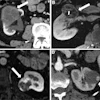
![Axial images from unenhanced calcium score cardiac CT (left) and curved planar reformation images from CT angiography (right) show that higher long-term exposure to air pollution is associated with greater coronary artery calcium and more obstructive coronary artery disease (CAD). Top row: Images in a 68-year-old male patient with higher 10-year mean ambient air pollution exposure (7.9 μg/m3 for particulate matter measuring ≤2.5 μm in diameter [PM2.5] and 17.4 parts per billion [ppb] for NO2) with extensive CAD (coronary artery calcium score [CACS] >1,000 and obstructive CAD [≥70% diameter stenosis]). Bottom row: Images in a 57-year-old female patient with lower 10-year mean ambient air pollution exposure (6.3 μg/m3 for PM2.5 and 4.6 ppb for NO2) with no CAD (CACS = 0 and no obstructive stenosis).](https://img.auntminnie.com/mindful/smg/workspaces/default/uploads/2026/06/hanneman.r6SMLzkezo.png?auto=format%2Ccompress&fit=crop&h=100&q=70&w=100)


![Axial images from unenhanced calcium score cardiac CT (left) and curved planar reformation images from CT angiography (right) show that higher long-term exposure to air pollution is associated with greater coronary artery calcium and more obstructive coronary artery disease (CAD). Top row: Images in a 68-year-old male patient with higher 10-year mean ambient air pollution exposure (7.9 μg/m3 for particulate matter measuring ≤2.5 μm in diameter [PM2.5] and 17.4 parts per billion [ppb] for NO2) with extensive CAD (coronary artery calcium score [CACS] >1,000 and obstructive CAD [≥70% diameter stenosis]). Bottom row: Images in a 57-year-old female patient with lower 10-year mean ambient air pollution exposure (6.3 μg/m3 for PM2.5 and 4.6 ppb for NO2) with no CAD (CACS = 0 and no obstructive stenosis).](https://img.auntminnie.com/mindful/smg/workspaces/default/uploads/2026/06/hanneman.r6SMLzkezo.png?auto=format%2Ccompress&fit=crop&h=112&q=70&w=112)