Thursday, December 2 | 8:00 a.m.-9:00 a.m. | SSCH08-4 | Room TBA
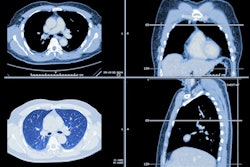
In individuals undergoing lung cancer screening, interval diagnostic chest CT findings show promise for setting the timing of subsequent lung cancer screening CT follow-up exams.The study results could help tailor lung cancer screening, according to a group led by presenter Dr. Pegah Khoshpouri from the University of Utah.
"In lung cancer screening participants, findings on interval diagnostic chest CT can potentially be used to adjust the timing of subsequent ... follow-up," the investigators wrote in their study abstract.
Individuals eligible for lung cancer screening can undergo diagnostic chest CT outside of their advised screening schedule, Khoshpouri and colleagues noted. Current American College of Radiology guidelines suggest that patients have lung cancer screening CT annually, without considering any interval diagnostic CT exams. The researchers sought to explore the incidence of these interval exams and their effect on lung cancer screening follow-up.
Out of a cohort of 8,073 patients who underwent CT lung cancer screening, Khoshpouri's group identified 32 who had interval diagnostic CT exams; of these, 30 had available images. The team compared these interval exams with both baseline and follow-up lung cancer screening exams to assess their impact on recommendations for follow-up.
Most patients (93.3%) had nodule findings on interval CT exam that were similar to those on follow-up CT exams: Findings on follow-up CT lung cancer screening didn't add more clinical information to the interval diagnostic exam.
"Follow-up and incidence lung cancer screening CT may potentially be timed using an interval diagnostic CT as a new baseline evaluation," Khoshpouri's group concluded.