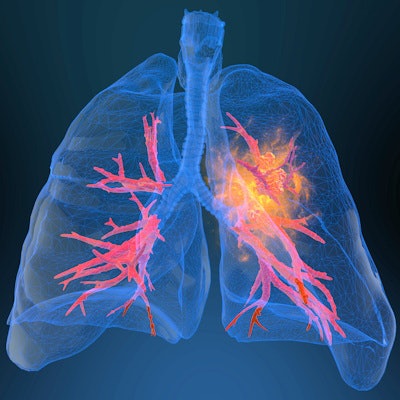
Rates of lung cancer screening with low-dose CT exams increased in almost 40% of U.S. states during the COVID-19 pandemic in 2020, according to a study published online recently in Chest.
Overall, lung cancer screening rates were low or unchanged, and five states did see significant decreases. But 19 states (38%) saw improvement in screening rates, noted a team led by Stacey Fedewa, PhD, of the American Cancer Society in Atlanta.
Fedewa and colleagues conducted a study of annual national and state-specific lung cancer screening rates in 2019, before the pandemic, and in 2020, during it. The group found the following:
- Nationally, lung cancer screening rates stayed stable between 2019 and 2020: About one in 15 eligible people underwent screening.
- Of 8.5 million eligible adults, 564,164 underwent lung cancer screening in 2019 and 557,795 received screening in 2020.
- 19 states saw increased rates of lung cancer screening, including: Colorado, Illinois, Iowa, Kentucky, Louisiana, Maine, Mississippi, Missouri, Nevada, New Hampshire, New Mexico, New York, North Carolina, North Dakota, Ohio, Oklahoma, Oregon, South Carolina, and South Dakota.
- Five states (Hawaii, Maryland, Rhode Island, Utah, and Vermont) saw decreases in lung cancer screening that ranged between 23% and 52%.
"Best practices from successful state and local lung cancer screening programs could inform ongoing efforts to detect lung cancers early," the authors concluded.