GE Healthcare has received clearance from the U.S. Food and Drug Administration (FDA) for a new data reconstruction method for CT that is based on deep learning.
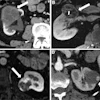
GE's Deep Learning Image Reconstruction (DLIR) engine uses a dedicated neural network to reconstruct CT data into what the company is calling TrueFidelity images. These combine the image quality of filtered back projection (FBP) with the low-dose capabilities of iterative reconstruction, according to GE, which debuted the technique at RSNA 2018.
GE believes that TrueFidelity images have the potential to improve reading confidence of radiologists for a wide range of clinical applications such as head, whole-body, and cardiovascular imaging, with better image sharpness and noise texture compared with iterative reconstruction. At the same time, TrueFidelity maintains the low-dose properties of iterative images.
The DLIR engine is available on GE's new Revolution Apex scanner and as an upgrade to Revolution CT scanners installed in the U.S.
At the same time, the FDA granted 510(k) clearance to GE's Bone VCAR, SnapShot Freeze 2, and Thoracic VCAR with GSI Pulmonary Perfusion applications. The applications are based on Edison, GE's platform to enable the acceleration of AI adoption.
Bone VCAR employs a deep-learning algorithm to identify and label vertebrae, enabling faster spine assessment and improving reporting efficiency. SnapShot Freeze 2 is designed for motion correction in cardiac imaging, while Thoracic VCAR with GSI Pulmonary Perfusion provides automated segmentation and measurements for assessment and follow-up of thoracic diseases.