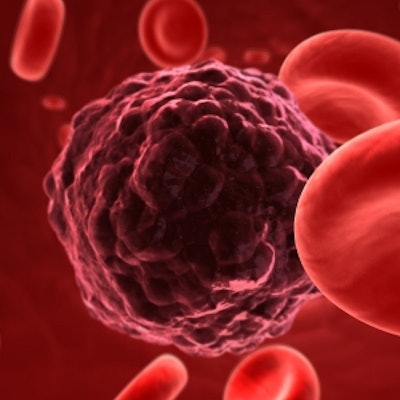
The U.S. Department of Defense (DOD) has awarded a $673,000 grant to researchers at Fox Chase Cancer Center in Philadelphia to develop a test for the early detection of lung cancer.
Dr. Martin Edelman, chair of the department of hematology/oncology, received the translational research partnership award in collaboration with Creatv MicroTech. The grant will allow him and his team to focus on using cancer-associated macrophage-like (CAML) cells to characterize suspicious lung nodules. The test will serve as second-level screening for patients whose CT lung screening scans are inconclusive.
Fox Chase and the Philadelphia Veterans Affairs (VA) Medical Center expect to begin patient enrollment toward the end of this year. Drs. Rohit Kumar and Anil Vachani are co-investigators on the study.

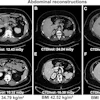



![Images show the pectoralis muscles of a healthy male individual who never smoked (age, 66 years; height, 178 cm; body mass index [BMI, calculated as weight in kilograms divided by height in meters squared], 28.4; number of cigarette pack-years, 0; forced expiratory volume in 1 second [FEV1], 97.6% predicted; FEV1: forced vital capacity [FVC] ratio, 0.71; pectoralis muscle area [PMA], 59.4 cm2; pectoralis muscle volume [PMV], 764 cm3) and a male individual with a smoking history and chronic obstructive pulmonary disorder (COPD) (age, 66 years; height, 178 cm; BMI, 27.5; number of cigarette pack-years, 43.2, FEV1, 48% predicted; FEV1:FVC, 0.56; PMA, 35 cm2; PMV, 480.8 cm3) from the Canadian Cohort Obstructive Lung Disease (i.e., CanCOLD) study. The CT image is shown in the axial plane. The PMV is automatically extracted using the developed deep learning model and overlayed onto the lungs for visual clarity.](https://img.auntminnie.com/mindful/smg/workspaces/default/uploads/2026/03/genkin.25LqljVF0y.jpg?auto=format%2Ccompress&crop=focalpoint&fit=crop&h=112&q=70&w=112)

