Tuesday, November 28 | 11:20 a.m.-11:30 a.m. | SSG11-06 | Room N229
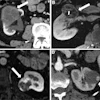
In this study, Canadian researchers investigated the potential of analyzing dual-energy CT scans to determine the nodal status of squamous cell carcinoma (SCC) in the head and neck.The imaging approach to evaluate enlarged lymph nodes and detect possible metastasis of squamous cell carcinoma continues to be a substantial challenge, Dr. Reza Forghani, PhD, from Jewish General Hospital in Montreal told AuntMinnie.com. The limitations of the present methods for detecting metastases in the lymph nodes often lead to neck surgery, which ends up being unnecessary in up to 70% of patients.
The researchers conducted a texture analysis of tumors on dual-energy CT scans of 87 patients with head and neck SCC using artificial intelligence (AI) to facilitate their visualization. Applying AI to dual-energy CT scans improved the texture analysis of the scans and also predicted nodal metastases in the neck, they found.
This technique can form the basis of an AI-assisted tool for predicting early nodal metastases and reducing the occurrence of unnecessary neck dissections, according to Forghani.
"This has potential applications beyond the head and neck, including applications in radiomic models developed to evaluate pathology for other organ systems," he said.