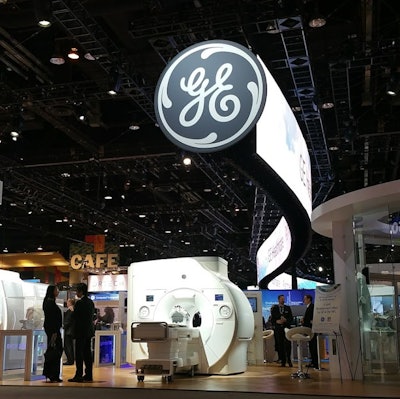
GE Healthcare and cardiovascular software developer HeartFlow have signed a global collaboration agreement to boost the clinical availability of HeartFlow FFR-CT, a technology that helps clinicians diagnose and treat patients with coronary artery disease.
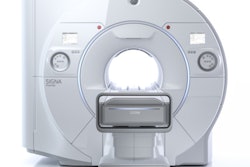
HeartFlow FFR-CT will be incorporated into GE's line of Revolution CT scanners and its CardioGraphe dedicated cardiovascular CT system. The collaboration will also include GE's clinical applications such as CardIQ, VesselIQ, and transcatheter aortic valve implantation (TAVI) planning, the two firms said.






![Axial images from unenhanced calcium score cardiac CT (left) and curved planar reformation images from CT angiography (right) show that higher long-term exposure to air pollution is associated with greater coronary artery calcium and more obstructive coronary artery disease (CAD). Top row: Images in a 68-year-old male patient with higher 10-year mean ambient air pollution exposure (7.9 μg/m3 for particulate matter measuring ≤2.5 μm in diameter [PM2.5] and 17.4 parts per billion [ppb] for NO2) with extensive CAD (coronary artery calcium score [CACS] >1,000 and obstructive CAD [≥70% diameter stenosis]). Bottom row: Images in a 57-year-old female patient with lower 10-year mean ambient air pollution exposure (6.3 μg/m3 for PM2.5 and 4.6 ppb for NO2) with no CAD (CACS = 0 and no obstructive stenosis).](https://img.auntminnie.com/mindful/smg/workspaces/default/uploads/2026/06/hanneman.r6SMLzkezo.png?auto=format%2Ccompress&fit=crop&h=112&q=70&w=112)
