The global CT market is valued at $4.9 billion U.S. (4.62 billion euros) for 2016, according to a report by Kalorama Information.
The firm attributes growth to the increasing number of clinical applications for CT, an aging population, and more chronic disease.
Kalorama also covers the following recent developments in the CT market:
- A low rate in false-positive findings
- Children receiving fewer CT scans now than a decade ago
- More CT angiography (CTA) exams in the Medicare population
- The development of next-generation CT scanners that reduce potentially harmful radiation while still improving overall image quality
- The growing role of CT for advanced prostate cancer
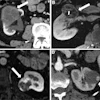






![Images show the pectoralis muscles of a healthy male individual who never smoked (age, 66 years; height, 178 cm; body mass index [BMI, calculated as weight in kilograms divided by height in meters squared], 28.4; number of cigarette pack-years, 0; forced expiratory volume in 1 second [FEV1], 97.6% predicted; FEV1: forced vital capacity [FVC] ratio, 0.71; pectoralis muscle area [PMA], 59.4 cm2; pectoralis muscle volume [PMV], 764 cm3) and a male individual with a smoking history and chronic obstructive pulmonary disorder (COPD) (age, 66 years; height, 178 cm; BMI, 27.5; number of cigarette pack-years, 43.2, FEV1, 48% predicted; FEV1:FVC, 0.56; PMA, 35 cm2; PMV, 480.8 cm3) from the Canadian Cohort Obstructive Lung Disease (i.e., CanCOLD) study. The CT image is shown in the axial plane. The PMV is automatically extracted using the developed deep learning model and overlayed onto the lungs for visual clarity.](https://img.auntminnie.com/mindful/smg/workspaces/default/uploads/2026/03/genkin.25LqljVF0y.jpg?auto=format%2Ccompress&crop=focalpoint&fit=crop&h=112&q=70&w=112)

