Sunday, November 27 | 10:45 a.m.-10:55 a.m. | SSA06-01 | Room N226
Radiologists from a level I trauma center wondered if the CT reports they were getting for patients transferred to their emergency department were accurate. Their six-month investigation didn't deliver much confidence in the original reads."Our study looked at over 600 CT scans of patients transferred to the Harborview Medical Center emergency department over a one-month period," said presenter Dr. Jeffrey Robinson, who is an assistant professor of radiology at the University of Washington.
In all, the study team compared 628 outside reports, two-thirds trauma and one-third nontrauma, with overreads from trauma radiologists in their own department, grading discrepancies in the two reports as minor or of potential clinical significance. Major discrepancies were found in almost one-fourth of trauma transfers and 6% of the nontrauma transfers.
"We found an unexpectedly large number of discrepancies that had the potential to be clinically significant," Robinson told AuntMinnie.com, noting that trauma transfer patients were significantly more likely to have a major discordance than nontrauma transfer patients.
The finding makes the radiologists want to formally overread all CT and MRI exams of emergency department transfer patients, Robinson commented.
"Compliance issues remain a barrier to doing that, though," he said.
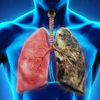
![Images show the pectoralis muscles of a healthy male individual who never smoked (age, 66 years; height, 178 cm; body mass index [BMI, calculated as weight in kilograms divided by height in meters squared], 28.4; number of cigarette pack-years, 0; forced expiratory volume in 1 second [FEV1], 97.6% predicted; FEV1: forced vital capacity [FVC] ratio, 0.71; pectoralis muscle area [PMA], 59.4 cm2; pectoralis muscle volume [PMV], 764 cm3) and a male individual with a smoking history and chronic obstructive pulmonary disorder (COPD) (age, 66 years; height, 178 cm; BMI, 27.5; number of cigarette pack-years, 43.2, FEV1, 48% predicted; FEV1:FVC, 0.56; PMA, 35 cm2; PMV, 480.8 cm3) from the Canadian Cohort Obstructive Lung Disease (i.e., CanCOLD) study. The CT image is shown in the axial plane. The PMV is automatically extracted using the developed deep learning model and overlayed onto the lungs for visual clarity.](https://img.auntminnie.com/mindful/smg/workspaces/default/uploads/2026/03/genkin.25LqljVF0y.jpg?auto=format%2Ccompress&crop=focalpoint&fit=crop&h=100&q=70&w=100)


![Images show the pectoralis muscles of a healthy male individual who never smoked (age, 66 years; height, 178 cm; body mass index [BMI, calculated as weight in kilograms divided by height in meters squared], 28.4; number of cigarette pack-years, 0; forced expiratory volume in 1 second [FEV1], 97.6% predicted; FEV1: forced vital capacity [FVC] ratio, 0.71; pectoralis muscle area [PMA], 59.4 cm2; pectoralis muscle volume [PMV], 764 cm3) and a male individual with a smoking history and chronic obstructive pulmonary disorder (COPD) (age, 66 years; height, 178 cm; BMI, 27.5; number of cigarette pack-years, 43.2, FEV1, 48% predicted; FEV1:FVC, 0.56; PMA, 35 cm2; PMV, 480.8 cm3) from the Canadian Cohort Obstructive Lung Disease (i.e., CanCOLD) study. The CT image is shown in the axial plane. The PMV is automatically extracted using the developed deep learning model and overlayed onto the lungs for visual clarity.](https://img.auntminnie.com/mindful/smg/workspaces/default/uploads/2026/03/genkin.25LqljVF0y.jpg?auto=format%2Ccompress&crop=focalpoint&fit=crop&h=112&q=70&w=112)