Computer-aided detection (CAD) firm Riverain Technologies has received U.S. Food and Drug Administration (FDA) clearance for its ClearRead CT nodule detection software.
ClearRead CT supports concurrent reading for all primary nodule types, including solid, subsolid, and ground-glass nodules. It's powered by acquisition normalization technology and processes CT scans from a range of manufacturers and acquisition protocols. No new hardware or customized tuning to specific devices or protocols is required.
ClearRead CT is comprised of two of Riverain's algorithms: ClearRead CT Vessel Suppress and ClearRead CT Detect.


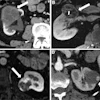



![Images show the pectoralis muscles of a healthy male individual who never smoked (age, 66 years; height, 178 cm; body mass index [BMI, calculated as weight in kilograms divided by height in meters squared], 28.4; number of cigarette pack-years, 0; forced expiratory volume in 1 second [FEV1], 97.6% predicted; FEV1: forced vital capacity [FVC] ratio, 0.71; pectoralis muscle area [PMA], 59.4 cm2; pectoralis muscle volume [PMV], 764 cm3) and a male individual with a smoking history and chronic obstructive pulmonary disorder (COPD) (age, 66 years; height, 178 cm; BMI, 27.5; number of cigarette pack-years, 43.2, FEV1, 48% predicted; FEV1:FVC, 0.56; PMA, 35 cm2; PMV, 480.8 cm3) from the Canadian Cohort Obstructive Lung Disease (i.e., CanCOLD) study. The CT image is shown in the axial plane. The PMV is automatically extracted using the developed deep learning model and overlayed onto the lungs for visual clarity.](https://img.auntminnie.com/mindful/smg/workspaces/default/uploads/2026/03/genkin.25LqljVF0y.jpg?auto=format%2Ccompress&crop=focalpoint&fit=crop&h=112&q=70&w=112)