The Medical Imaging and Technology Alliance's (MITA) CT Group has published a list of frequently asked questions for users of the American College of Radiology's (ACR) CT Quality Control Manual.
The MITA document covers several topics, such as the relationship between ACR's manual and the quality-control programs that might be recommended by CT scanner manufacturers. It also mentions how vendor quality-control programs are established.
In addition, it covers how to deal with a CT scanner's failure to pass an ACR-mandated specification, as well as beam widths and acceptance testing. More information is available here.

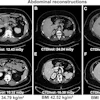



![Axial images from unenhanced calcium score cardiac CT (left) and curved planar reformation images from CT angiography (right) show that higher long-term exposure to air pollution is associated with greater coronary artery calcium and more obstructive coronary artery disease (CAD). Top row: Images in a 68-year-old male patient with higher 10-year mean ambient air pollution exposure (7.9 μg/m3 for particulate matter measuring ≤2.5 μm in diameter [PM2.5] and 17.4 parts per billion [ppb] for NO2) with extensive CAD (coronary artery calcium score [CACS] >1,000 and obstructive CAD [≥70% diameter stenosis]). Bottom row: Images in a 57-year-old female patient with lower 10-year mean ambient air pollution exposure (6.3 μg/m3 for PM2.5 and 4.6 ppb for NO2) with no CAD (CACS = 0 and no obstructive stenosis).](https://img.auntminnie.com/mindful/smg/workspaces/default/uploads/2026/06/hanneman.r6SMLzkezo.png?auto=format%2Ccompress&fit=crop&h=112&q=70&w=112)


