Imaging contract research organization ImageIQ and the Cleveland Clinic have found that certain professional baseball pitchers are more prone to injuries due to their physical characteristics.
The orthopedic clinical study, which received grant funding from Major League Baseball, found that professional baseball pitchers with lower degrees of dominant humeral torsion, or the degree of twisting of the long arm bone running from the shoulder to the elbow, are more prone to severe arm and shoulder injuries. The researchers reported their findings in the American Journal of Sports Medicine (September 2013, Vol. 41:9, pp. 2015-2021).
The group believes the results could allow players and teams to assess injury risk in the future, work proactively to prevent injuries, and make better-informed player personnel decisions.
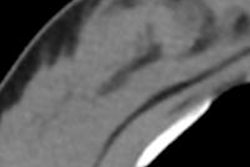
ImageIQ used 3D clinical image and motion analysis software to quantitatively measure joint anatomy differences in the shoulders of 25 professional pitchers from CT image data provided by the Cleveland Clinic. The researchers then followed the pitchers for two years and recorded the number of days missed from pitching activities as a measure of the severity and incidence of the players' injuries.
In other findings, there was also a trend relating lower side-to-side torsion differences with more severe upper extremity injuries. Dr. Joshua Polster, a staff radiologist at the Cleveland Clinic's Imaging Institute, served as the study's principal investigator.