Nonprofit technology research organization ECRI Institute said it has expanded its platform of CT safety services to help hospitals and healthcare systems address medical radiation as a patient safety issue.
ECRI's services now include a Web-based assessment survey, a customized onsite safety review, publications and guidance articles, and technology procurement support, ECRI said.
The company's CT radiation dose safety Insight assessment, a new Web-based clinical service, offers a multidisciplinary approach to identifying risks with a series of questions on radiation safety, ECRI said. Customized assessment through ECRI's CT dose safety reviews, led by the company's experienced medical physicists, is designed to identify vulnerabilities and offer realistic solutions that can be implemented to improve radiation safety, the organization said.


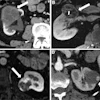



![Images show the pectoralis muscles of a healthy male individual who never smoked (age, 66 years; height, 178 cm; body mass index [BMI, calculated as weight in kilograms divided by height in meters squared], 28.4; number of cigarette pack-years, 0; forced expiratory volume in 1 second [FEV1], 97.6% predicted; FEV1: forced vital capacity [FVC] ratio, 0.71; pectoralis muscle area [PMA], 59.4 cm2; pectoralis muscle volume [PMV], 764 cm3) and a male individual with a smoking history and chronic obstructive pulmonary disorder (COPD) (age, 66 years; height, 178 cm; BMI, 27.5; number of cigarette pack-years, 43.2, FEV1, 48% predicted; FEV1:FVC, 0.56; PMA, 35 cm2; PMV, 480.8 cm3) from the Canadian Cohort Obstructive Lung Disease (i.e., CanCOLD) study. The CT image is shown in the axial plane. The PMV is automatically extracted using the developed deep learning model and overlayed onto the lungs for visual clarity.](https://img.auntminnie.com/mindful/smg/workspaces/default/uploads/2026/03/genkin.25LqljVF0y.jpg?auto=format%2Ccompress&crop=focalpoint&fit=crop&h=112&q=70&w=112)


