Dear AuntMinnie Member,
Incidental kidney lesions frequently pop up during virtual colonoscopy exams. How do you deal with them?
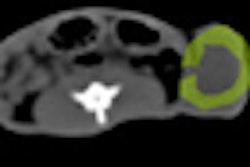
Fortunately, most aren't worth worrying about, according to a large study we're featuring this week in our Virtual Colonoscopy Digital Community. Researchers from the University of Wisconsin in Madison evaluated 3,000 patients receiving VC studies and found that renal cysts occurred in 14% of the study population.
Of the lesions deemed to be benign, none showed any signs of progression during follow-up. International editor Eric Barnes has our coverage, which you can read by clicking here or visiting our Virtual Colonoscopy Digital Community at vc.auntminnie.com.
SNM Image of the Year
The SNM's Image of the Year award is always much anticipated in the molecular imaging community. A research team led by Kunihiro Nakada, MD, of Hokko Memorial Hospital in Sapporo, Japan, received this year's prize based on its efforts to fuse MDCT and technetium-99m sestamibi SPECT images.
The fused images provide information regarding detailed anatomical localization, angiography, and metabolism of an enlarged parathyroid gland. Features editor Wayne Forrest has all of the details, which you can find here or by visiting our Molecular Imaging Digital Community at molecular.auntminnie.com.