Dear AuntMinnie Member,
In a milestone for virtual colonoscopy, the New England Journal of Medicine today published clinical results from a large multicenter trial of VC that show the imaging technique delivering comparable accuracy to optical colonoscopy -- the gold standard for detecting clinically significant colorectal polyps.
The results from the American College of Radiology Imaging Network's (ACRIN) National CT Colonography Trial are hardly breaking news -- we broke the story a year ago in our Virtual Colonoscopy Digital Community. But publication of the complete results in a prestigious academic journal such as NEJM will help solidify VC's evolution from an experimental technique into an accepted screening tool for colorectal cancer. Learn more by clicking here.
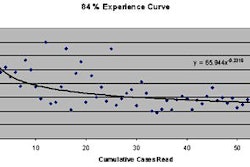
In other VC news, a new study in Radiology indicates that a comprehensive training program can produce impressive results for those reading VC exams -- even medical students. Click here to learn about how University of Chicago researchers implemented a rigorous training program for novice readers.
SPECT/CT for bone lesions
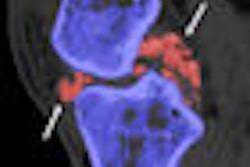
In the world of musculoskeletal imaging, a recent study by U.S. researchers indicates that SPECT/CT can help determine the exact location of bone lesions. SPECT/CT found more lesions than either SPECT alone or planar imaging and also was better able to predict a patient's final diagnosis.
Find out more about the study by clicking here, or visit the Musculoskeletal Imaging Digital Community at msk.auntminnie.com.