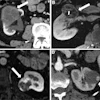
(Radiology Review) Low-dose CT is a useful imaging tool for patients with suspected urolithiasis, according to Swiss radiologists who performed a meta-analysis to evaluate the diagnostic performance of low-dose CT.
Dr. Tilo Niemann and colleagues at University Hospital Basel reviewed research studies published between 1995 and 2007 that used low-dose CT for detecting urolithiasis. They analyzed seven studies that included 1,061 patients, and the American Journal of Roentgenology recently published their research (AJR, August 2008, Vol. 191:2, pp. 396-401).
Conventional radiography has been reported to have a sensitivity of 57% and specificity of 71% for detecting ureteral concrements, as well as a poor detection rate of 50% to 70%, according to the authors. Before MDCT, excretory urography was used to evaluate patients with acute flank pain; however, diagnostic accuracy failed to meet clinical needs and expectations, they stated.
Because of the high contrast difference between renal calculi and adjacent soft tissue, a substantial dose reduction should be possible. CT has been shown to better assess calculi type and location compared with plain radiography and excretory urography, they noted.
They performed a literature review that revealed unenhanced CT showed a sensitivity of 97% and a specificity of 96%, and is the preferred imaging tool for patients with acute flank pain. "The main disadvantage of CT is that it exposes patients to a relatively high radiation dose (8 to 16 mSv)," the authors wrote.
For low-dose CT, they found that the combined sensitivity was 0.966 and the specificity was 0.949. Low-dose CT was considered to be less than a 3 mSv dose applied for the entire CT examination.
"The results of this meta-analysis suggest that a low-dose CT protocol can be used as the first-line imaging tool in the clinical workup of patients with suspected renal colic," the authors concluded. They cautioned that dose-reduced fixed-tube-current protocols are limited in obese patients compared with standard-dose protocols.
"Diagnostic Performance of Low-Dose CT for the Detection of Urolithiasis: A Meta-Analysis"
Tilo Niemann et al
Department of Radiology, University Hospital Basel, Petersgraben 4, 4031, Basel, Switzerland
AJR 2008 (August); 191:396-401
By Radiology Review
September 15, 2008
Copyright © 2008 AuntMinnie.com