Dear AuntMinnie Member,
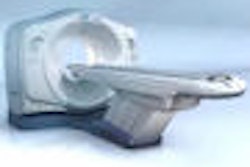
This week in our CT Digital Community we bring you coverage of Stanford University's International Symposium on Multidetector-Row CT, taking place in Las Vegas. Some of CT's leading lights are discussing the hottest topics in the modality, including the real story on radiation dose and medically induced cancer, how to manage contrast nephropathy, and the advantages of dual-energy CT.
CT radiation dose has generated headlines in the past year, but despite all the attention, there's still a significant level of misunderstanding about dose and cancer, according to speakers in a series of presentations on Tuesday.
While the risk of CT-induced cancer is real, it's not as high as what you might read in the lay press or even in respected academic journals, most agreed. Even so, imaging specialists need to be more aggressive about reducing dose through the adoption of new dose-reduction technologies and by educating their colleagues, referring physicians, and patients. Learn more by clicking here.
Another controversial topic is contrast nephropathy, caused by reaction to contrast media in patients with chronic kidney disease. It can be a serious condition in some cases, but if managed carefully, radiologists can reduce its incidence. Find out how by clicking here.
Finally, researchers from Duke University discussed their use of a dual-energy protocol in which the CT scanner operates at two different kVp settings. They believe the technique can help find small liver lesions by differentiating imaging targets with similar densities but different x-ray attenuation properties. Get the details by clicking here.
You'll find these stories, as well as more coverage of the MDCT show, in our CT Digital Community at ct.auntminnie.com.
SIIM coverage coming up
Be sure to check back with AuntMinnie.com this week for coverage of the Society for Imaging Informatics in Medicine (SIIM) meeting, starting today in Seattle. AuntMinnie editors are on the scene, reporting on the latest developments in PACS, healthcare IT, and advanced visualization.