Multimodality vendor GE Healthcare is planning to use this year's RSNA show to highlight new CT technologies that improve diagnostic quality and spatial resolution, with a strong emphasis on heart imaging techniques like plaque characterization.
The Chalfont St. Giles, U.K., company will announce additions to its CardIQ cardiac scanning and analysis software that enable users to determine plaque density within a coronary artery. GE will also highlight a new CT perfusion package designed to efficiently assess perfusion for stroke treatment.
The company will also promote LightSpeed Xtra, a 16-slice wide-bore CT scanner designed for specialty radiology applications like trauma, interventional, and bariatric procedures. LightSpeed Xtra was first introduced at the 2005 RSNA show and received clearance from the U.S. Food and Drug Administration in April 2006.
Another new GE CT technology is Helical Shuttle, which is designed to address the need for wide anatomic coverage for both dynamic angiography and perfusion in a single scan, giving radiologists better visualization in whole-organ anatomical and physiological assessment.
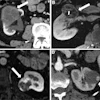
On the research side, GE will discuss new detector technologies that have captured the first images of what the company is calling "spectral CT." GE believes the technique provides new and different information not found with existing CT detector technology.
GE will also demonstrate work from researchers at Keio University in Japan, where radiologists are investigating volume dual-energy imaging. The researchers will present their work on volume dual-energy CT with a 50-cm field-of-view.
Finally, GE will be celebrating the 1,000th shipment of its 64-slice LightSpeed VCT scanner, which began shipping less than two years ago.
By Brian Casey
AuntMinnie.com staff writers
October 26, 2006
Copyright © 2006 AuntMinnie.com